Due to globalization and the exponential growth of international trade, we are now more connected than ever. However, this phenomenon of intensified information sharing is hindered by linguistic and cultural barriers. In such a context, translators act as true vectors of communication between different cultures.
Note from Pierre: this article is provided by Lola Thans from the translation agency Cultures Connection. Many of you ask me questions about the profession of translator, which I have never practiced in a truly professional manner. It is therefore with pleasure that I offer this post that should answer all your questions.
Translation in Brief
Translation involves transposing written content from one language to another. This exercise requires diverse knowledge that is acquired through solid training and many years of experience. The work of a translator is therefore not improvised. While bilingualism is a major asset, even an indispensable skill, it is not enough to consider oneself a professional in the field.
Working Languages
In most cases, the translator works into their native language. No language is mastered perfectly like one’s mother tongue. In translation, it is enough to understand the source language of a text, while you must be able to juggle all the aesthetic, syntactic, and grammatical aspects of the target language. This is why only translators who have spent many years abroad offer a “back” translation service (from language A, our mother tongue, to language B, which was acquired later). As for language combinations, it goes without saying that some of them are more popular than others. Moreover, the most common combinations offered in translation schools are not always the most sought after in the market.
To maximize the likelihood of being hired, two factors must be taken into account. The first: the more atypical your language combination is (for example, you master Bulgarian and Finnish wonderfully), the less fierce the competition will be. Secondly, consider the place that some emerging countries might acquire on the international stage (why not learn one of the BRICS languages?). Choosing a language combination that favors employment is a matter of supply and demand; a saturated sector today can open up completely tomorrow… and vice versa!
Interpreter or Translator?
The distinction between these two disciplines is often confused by the general public. Interpretation is not translation. Despite their many similarities, interpretation and translation require individual skills. The main difference is the channel used: interpretation is limited to oral communication, while translation is solely written.
Moreover, the interpreter does not have access to the materials that the translator has at the time of completing their task. Indeed, they are required to follow an intense pace of about 150 words per minute, while the translator translates an average of 2,000 words per day.
Note from Pierre: I confirm that this is the most common misconception in this matter. Although it is possible to work as both a translator and an interpreter (I know people in this case), they are two very distinct professions.
Advantages of Translation
Translation allows us to build bridges between cultures, languages, and eras. As a link in the chain of intercultural communication, it enables us to broaden our horizons. After all, as writer and director Pier Paolo Pasolini stated: “Translation, in all its aspects, is the most vital operation for mankind.” Without translation, we would live in isolated countries, regions, and provinces, victims of our inability to benefit from the literature and knowledge of our neighbors.
The Inherent Difficulties of Translation
Like many other professions, the profession of translator presents numerous difficulties that are unique to it. Day after day, translators face all kinds of obstacles that they encounter in order to provide quality results tailored to their target audience while respecting the author’s intentions. These pitfalls can manifest in various forms: terms and concepts that are untranslatable or nonexistent in the target language, technical terms that require in-depth research, wordplay, riddles, humorous notes, or even idioms that require incredible mental gymnastics to hope to create the same effect with the target audience.
Whether semantic, syntactic, grammatical, or lexical, each of them is of paramount importance during translation. They must be skillfully navigated, always keeping in mind the cultural dimension of the texts in question.
Bilingualism and Translation
This point deserves a moment’s examination. Indeed, many people think that being bilingual is synonymous with being a translator. “I speak two languages, so I can be a translator!” Let’s turn back the clock: mastering two or more languages and being able to switch between them are two distinct exercises. Here, it is about transposing content from one culture to another, from one universe to another. This implies mastering not only the working languages in question but also the cultural dimension associated with them. It should also be remembered that the profession of translator is not improvised. Translators are trained, educated, and they become increasingly effective over time.
Specializations
Over the years, or sometimes from the very early stages of the profession, translators take a path that will lead them to specialize in a specific field. This is how literary, technical, scientific, legal translators… and many others are born. As in other sectors, it is essential to entrust any translation project to a translator specialized in the field. You wouldn’t use the services of a plumber to change a lock, would you? Similarly, any scientific content should be assigned to a professional in that field, for whom scientific terms and concepts hold no secrets.
Note from Pierre: specialization is an excellent way to stand out, even in very common language pairs. When we talk about translation, we generally think of novels, but in reality, the fields of expertise are countless: law, medicine, cinema, engineering…
If a scientific term is often unambiguous and has only one translation, it is not enough to transpose equivalences to produce a harmonious and coherent work. There is no doubt that technical translation and literary translation are two distinct disciplines. While the former seeks to convey a clear, precise, and unambiguous message, the latter will attempt to pay homage to the beauties of language, the poetry of words, and the subtleties of discourse.
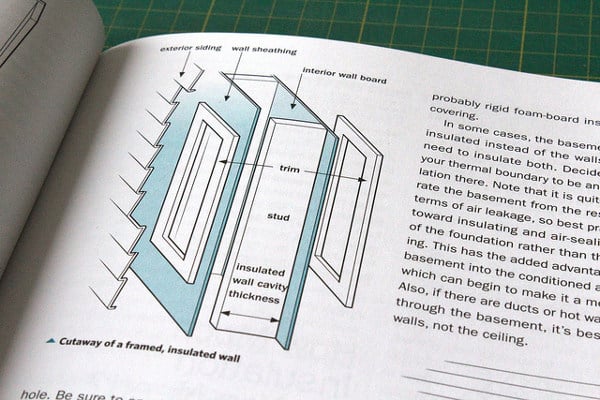
We don’t necessarily think about it, but documents represent a significant part of translated materials. Computer-Assisted Translation
Translators have all kinds of tools at their disposal that are of great help in their work. These linguistic experts are not street dictionaries, and they often open a reference book to find an appropriate translation. This profession pushes translators to learn throughout their careers, to have a thirst for knowledge. That is why experience holds a paramount place in this type of profession.
These tools include computer-assisted translation (CAT) tools that allow them to harmonize their translations and improve the quality of their work and productivity through the translation memories they incorporate. These are databases containing thousands of already translated texts and their equivalence in the target language. They also allow the development of terminology databases, which are lexical sheets by terms, glossaries, juxtaposition of text segments, and more.
These software tools come in all shapes and sizes for all needs and budgets, some are even free! It goes without saying that the provision and quality of services fluctuate depending on the costs involved. However, for the professional, they are an invaluable resource, essential for quality work.
An Irreplaceable Role
Although computers have stolen the stars from humans in many fields, translators are not ready to give up their place. The computer tool greatly facilitates the task of the latter, but it is not yet capable of competing with their skills. Machine translation engines cannot replace the creative part and subtlety of a translation. Although progress has been made in the field of artificial translation, the translations delivered are in most cases literal transcriptions and lack meaning or logic.
Translation is an exercise that requires reflection, doubt, intuition, questioning, creation, subjectivity, and a lot of patience. However, a computer does not possess these qualities. The only possible role of a translation aid tool is to provide a first draft, a pre-translation that must be revised, adapted, and modified by a professional translator.
Note from Pierre: if you are wondering why Google Translation sometimes provides results that border on the absurd, I invite you to watch Linguisticae’s video on this topic.
How to Become a Translator?
It should be emphasized that translation and interpretation are not protected professions. Therefore, it is not mandatory to obtain a degree from a prestigious school to be hired, although it is highly recommended to undergo solid training. This will be your gateway to many institutions.
Once you have your degree, a wide range of possibilities will open up to you: starting as a freelancer, adding languages to your repertoire, applying to major institutions, etc. Do not hesitate to join organizations such as the Société Française des Traducteurs (SFT) or the Association Internationale des Interprètes de Conférence (AIIC) to benefit from support from experienced and competent peers, and to assert your rights as a professional.
The Profession in Daily Life
According to legend, translators are isolated in their offices, rarely seeing the light of day. This is not the case. In fact, it is even a particularly diverse profession: you will tackle a variety of subjects, meet clients from all walks of life, and even have the opportunity to travel! Isn’t that the dream?
If you connect to your account, you will need to learn accounting concepts and develop an entrepreneurial spirit. Diversify your offer by proposing multiple specializations, develop your skills by combining translation and interpretation, and end the long hours of solitude in front of your computer screen.
An Unmatched Profession
Translators, these hidden artisans of communication, allow us day after day to share all kinds of information on an international scale. Writings, speeches, knowledge, medicine, and a multitude of other types of content cross borders to reach the other side of the world thanks to their work. Without them, we would remain cloistered within our linguistic borders, and the sharing of information would be terribly reduced. Let’s end with a beautiful quote from George Steiner: “Without translation, we will live in neighboring provinces without silence.”
Tag: how to become an interpreter