The germination of an acorn does not guarantee the emergence of a harmonious bonsai. A simple oversight during the first root pruning complicates the entire formation of the miniature tree. Some specimens, despite coming from the same harvest, develop unpredictable growth rates.
The selection of the acorn, the preparation of the substrate, and the management of watering directly influence the success of the cultivation. Human intervention occurs at every stage, from the choice of container to monitoring root development. Errors in handling or timing of the seasons significantly reduce the chances of obtaining a viable tree.
Why transforming a simple acorn into a bonsai can become an exciting adventure
Planting an acorn as a bonsai is not just a simple horticultural act. This process engages an intimate relationship with time and living matter. The oak, a symbol of strength and resilience since antiquity, fascinates with its ability to endure through the centuries, rooted in Celtic, Greek, and Roman mythologies. Transforming this giant into a miniature version questions the very notion of patience, transmission, and mastery.
The practice originating from Japan finds a particular resonance here: the oak bonsai is part of the Zen tradition, where each intervention on the tree becomes an exercise in awareness and rigor. The creation process is not limited to technique. It is a rewarding process that combines patience, creativity, and practice. Observing the development of a Quercus robur, ilex, suber, pubescens, or alba, constraining the vigor of the acorn to shape the aesthetics of a miniature canopy, confronts the grower with slowness and the unexpected.
Growing an oak bonsai requires a precise know-how and constant attention. The repeated actions: pruning, repotting, wiring become rituals. The slightest deviation can disrupt the fragile balance of the tree. This adventure, far from standardized production, engages both hand and mind. Those who choose to plant an acorn as a bonsai, according to the comprehensive guide to creating bonsai from an acorn: essential steps – Projet Habitat, join a lineage of gardeners who foster a dialogue between tradition, aesthetics, and living transmission.
Three key dimensions give flavor to the adventure:
- Combining patience and creativity: growing an oak bonsai allows for neither haste nor approximation.
- Embedding your action in the long term: an oak bonsai can live for several decades, even a century.
- Participating in a living art: each tree bears the unique mark of its creator.
What are the essential steps to germinate and plant an acorn as a bonsai?
The choice of the acorn is a step that tolerates no negligence: prioritize a recently fallen fruit, free from injury or suspicious spots. This caution determines the success of germination. Then comes the time for stratification, which simulates winter to awaken the embryo. Place your acorns in a bag containing damp sand or potting soil, keeping it cool, between 2 and 5°C, for six to eight weeks. This cold period, essential, triggers the desire to germinate.
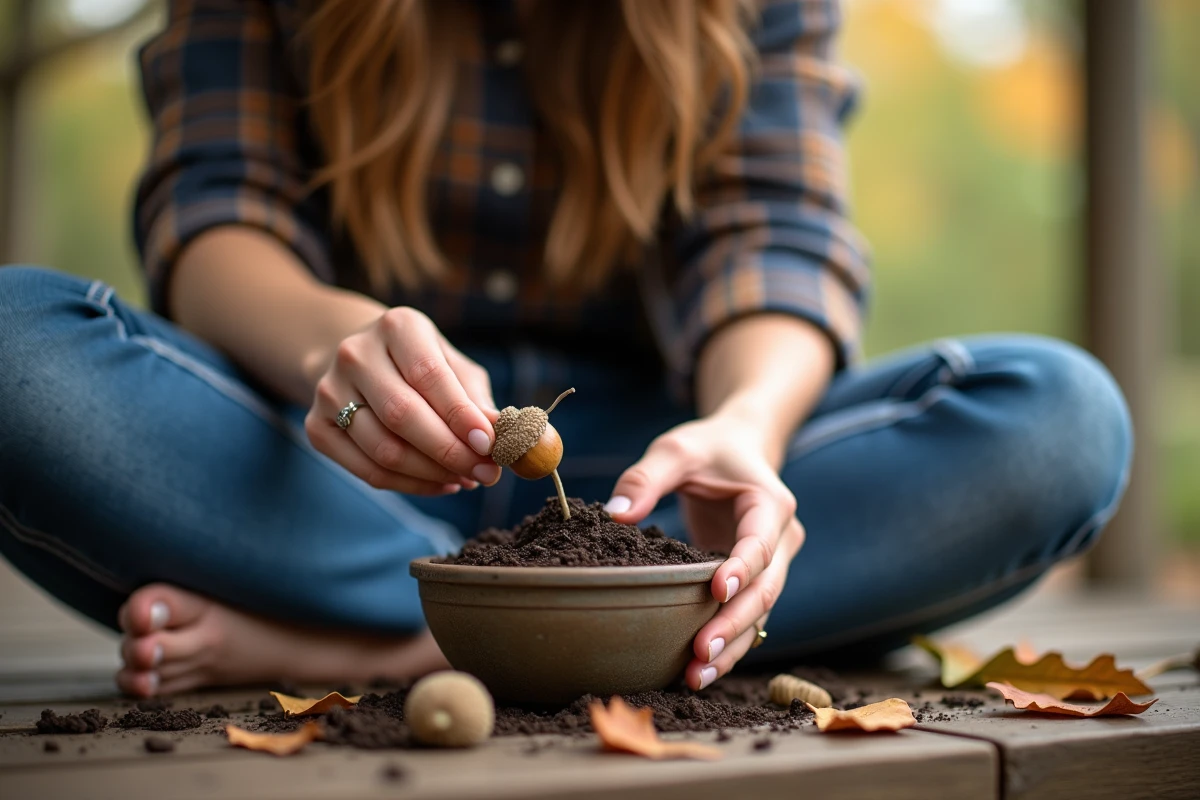
When the acorns show a white sprout, it is time to pot them. Use a perforated container, either terracotta or plastic, filled with a draining substrate made of garden soil, coarse sand, and compost. Place the acorn horizontally one or two centimeters below the surface, with the sprout facing down.
Watering requires moderation and attention: the substrate should remain moist but never soggy. Quickly, the main root stretches. From the first weeks, monitor it and pinch it if necessary to prevent it from sinking too deep, a prerequisite for taming the vigor of the future miniature tree.
In the following spring, repot to readjust the root network. At each stage, consistency and observation guide the hand of the enthusiast. Between meticulous gestures and attentive observation, the action refines, rigor supplants improvisation.
Smart tips and care to support the growth of your future oak bonsai
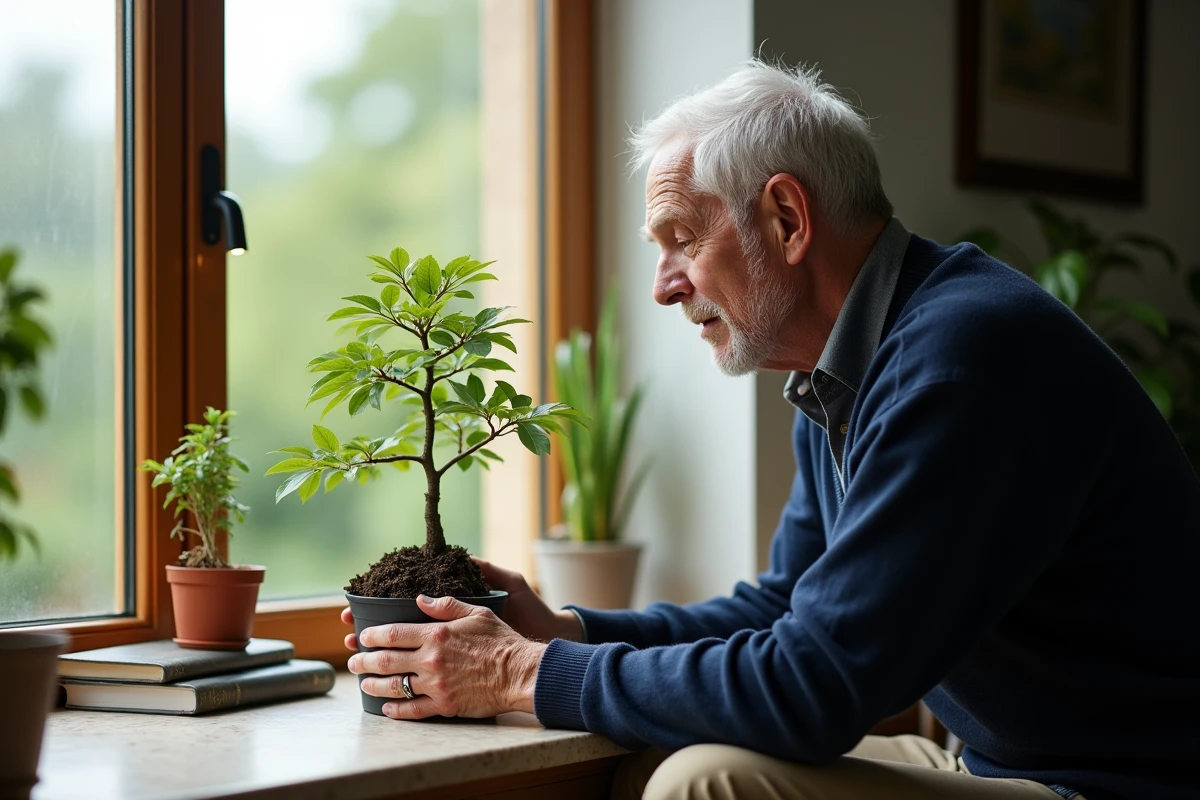
The daily care of the oak bonsai requires constant attention. Regarding watering: ensure that the substrate remains moist but never waterlogged. Allowing water to stagnate risks suffocating the roots. Prefer morning watering to limit fungal attacks. For light, provide bright but filtered exposure, especially during its youth, with light partial shade being ideal. Protect it from dry winds that could desiccate the foliage and compromise growth.
Here are some additional actions to incorporate into your routine:
- The application of a specific fertilizer for bonsais, applied in spring and then in summer, helps regulate growth. Dose carefully: too much fertilizer weakens the young plant.
- Spring pruning encourages branching and structures the silhouette. Wiring guides the branches, but the wire must be removed before it leaves a mark on the bark.
- A fine mesh protects the tree from herbivores outdoors. At the same time, monitor for pests: aphids, scale insects, fungi. A natural treatment, with black soap or neem oil, often suffices to curb a nascent invasion.
- When winter comes, insulate the pot from frost. A simple mulch or cold shelter is sufficient. While the oak tolerates low temperatures well, its confined roots remain vulnerable during waves of intense cold.
Repeat these actions, season after season. The oak, in response, will reveal a vitality and elegance that no standardized tree can match. It is up to you to write the next chapter, branch by branch, year after year, facing this plant that defies time and certainties.