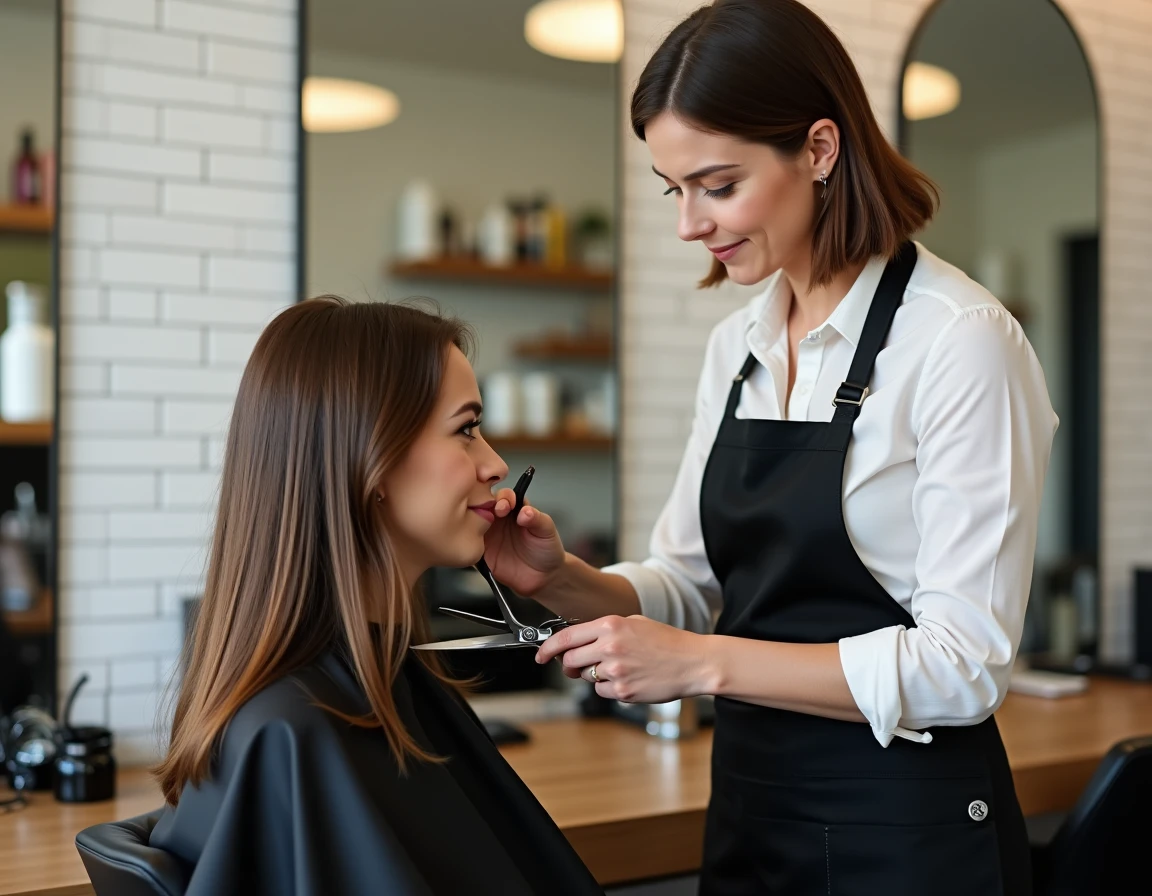
Thinning hair involves reducing the volume of certain strands without altering the overall length of a haircut. This hairstyling technique, commonly used in salons, produces very different results depending on the hair type, its density, and its health condition. If misused, it can weaken the hair fiber and create a sparse appearance that is difficult to correct.
Thinning and loss of density: a trap for weakened hair
Have you noticed that your hair seems less dense in recent months, after a pregnancy or with age? It is precisely in these situations that thinning poses the most problems.
On already sparse hair, removing material from the lengths visually accentuates the gaps. The ends become translucent, daily styling loses its hold, and the cut gives the impression of damaged hair rather than lightened hair. Thinning fine or sparse hair worsens the appearance of emptiness, creating an effect that is exactly the opposite of what is desired.
In cases of early alopecia, postpartum hair loss, or age-related density loss, several hairdressing training schools now recommend reserving thinning for hair that is at least of medium density and in good condition. When wishing to thin hair with Zaturelle, this precaution is highlighted among the fundamental points of caution.
For these profiles, a soft layering – which gradually shortens certain layers without thinning the fiber – offers movement and lightness without sacrificing the remaining mass. The result creates the illusion of volume rather than removing it.
Curly, frizzy, and textured hair: why thinning disrupts the curl pattern
On straight, thick hair, thinning works well: it lightens the weight, facilitates movement, and softens the contours of the face. On curly or frizzy hair, the result is often disappointing.
The reason lies in the very structure of the curl. Each curly strand forms a spring whose shape depends on the weight and homogeneity of the fiber. When you thin this strand with sculpting scissors, the spring deforms. Thinning curls produces frizz and uncontrollable volume instead of the expected fluid effect.
Several “curly” specialized hairdressers in France recommend full cuts, without razor thinning or sculpting scissors. They favor layers suited to the texture that respect the natural pattern of each curl. For wavy hair, a slight texturizing at the ends may be enough to add movement without disrupting the lengths.
Quality of scissors and cutting technique: what changes the result
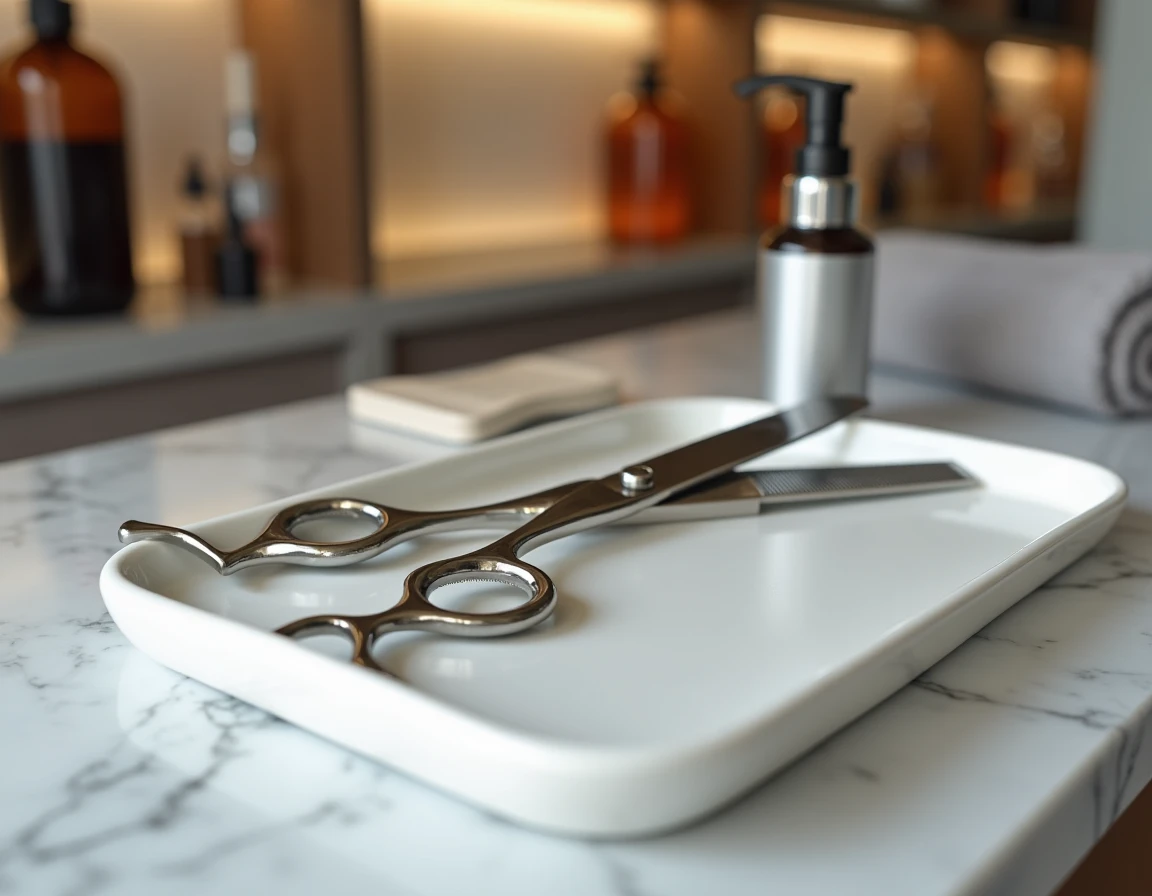
Not all thinning scissors are created equal, and the difference is directly visible on the hair fiber.
Cheap sculpting scissors “mash” the hair instead of cutting it cleanly. The cut leaves micro-tears on the fiber, leading to split ends and a feeling of dry hair after a few weeks. Well-sharpened blades reduce breakage and split ends after thinning. In high-end salons, the trend is to replace entry-level scissors with models featuring Japanese blades, which are more precise and less aggressive on the hair.
The technique is as important as the tool. Here are the points to check before getting started:
- Work on dry or slightly damp hair to see the actual volume, not on wet hair that masks density.
- Thin only on the lower third of the lengths, never near the roots or on the structure of the cut, especially if the hair is fine.
- Proceed in small sections and check the result strand by strand, as removing too much material is irreversible until regrowth.
Thinning or layering: choosing the right technique according to hair type
Many confuse thinning and layering, while these two cuts produce very different effects on the volume and movement of the hairstyle.
Thinning reduces the thickness of the strand along its length. It decreases the thickness without altering the overall shape of the cut. Layering, on the other hand, creates layers of different lengths that overlap to give dimension to the face.
| Criterion | Thinning | Layering |
|---|---|---|
| Objective | Reduce volume and thickness | Create movement and dimension |
| Thick and straight hair | Suitable | Suitable |
| Fine or sparse hair | Not recommended | Preferable (soft layering) |
| Curls and frizz | Risk of frizz | Respects the curl pattern |
| Effect on the ends | Thinned ends, sometimes translucent | Full ends, clean cut |
Layering suits most hair textures, while thinning remains a precision technique reserved for dense hair. On thick Asian hair, for example, thinning softens the cut line and adds real lightness. On fine European hair, the same action can create a “rat tail” effect on the ends.
When thinning remains relevant
Thinning retains its value in specific cases:
- Very thick and straight hair that lacks flexibility and natural movement.
- Finishing touches on the edges of a cut: bangs, sideburns, nape, to soften the contours without a visible cut line.
- Medium to long hair with volume concentrated at the ends, where targeted lightening restores balance to the hairstyle.
Outside of these situations, a soft layering or light texturizing at the ends often produces a better result with less risk to the fiber.
The choice between thinning and layering should never be made out of habit or default. It depends on the actual density of the hair, its texture, and its current condition. A good hairdresser evaluates these three parameters before taking their scissors and does not hesitate to forgo thinning when the hair does not have the necessary mass to support it.