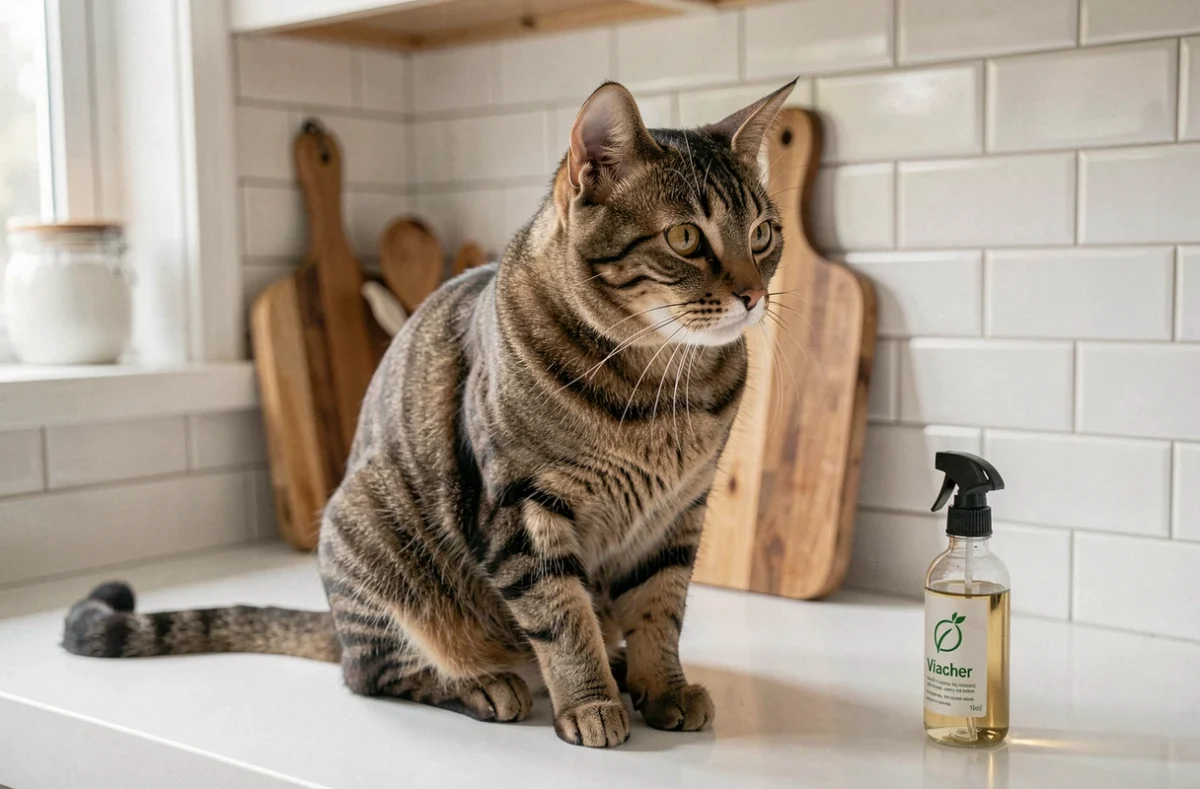
White vinegar is found in almost every cupboard. It is used to descale the kettle, clean windows, and refresh surfaces. And when you live with a cat, the temptation is great to use it for everything: litter, floors, urine stains. The product is presented everywhere as safe and natural. In practice, several everyday situations deserve our attention before spraying it everywhere.
Toxic household mixtures: the real danger of white vinegar for cats
When used alone and properly diluted, white vinegar poses no direct toxicity to a feline. The most concrete risk does not come from the product itself, but from what is combined with it.
Mixing white vinegar and bleach can release chlorine gas. This gas irritates the respiratory tract, eyes, and mucous membranes. A cat, which lives close to the ground and breathes in fumes more closely than an adult standing, is particularly exposed.
The combination of vinegar and hydrogen peroxide forms peracetic acid. This substance is irritating to the skin, eyes, and respiratory system. A cat that walks on a surface treated with this mixture and then licks its paws during grooming directly ingests the residue.
Have you ever noticed your cat rubbing its nose after sniffing a strong product? It’s a protective reflex. But in the face of gaseous emissions, this reflex is not enough. The simplest rule: never combine vinegar with another household product, especially in a closed room where your pet lives.
Detailed precautions on the specific dangers of white vinegar for felines are available on the Transpoil website for cats, which also discusses proper dilution practices.
Essential oils and white vinegar: a deceptive cocktail for your cat
Many homemade recipes suggest adding essential oils to white vinegar to enhance the repellent effect or scent the cleaner. The reasoning seems logical: two natural products combined should be risk-free.
Cats metabolize certain compounds found in essential oils very poorly. Their liver lacks some enzymes necessary for eliminating these substances. Among the oils reported as concerning for felines are: tea tree, pine, citrus, cinnamon, clove, peppermint, eucalyptus.
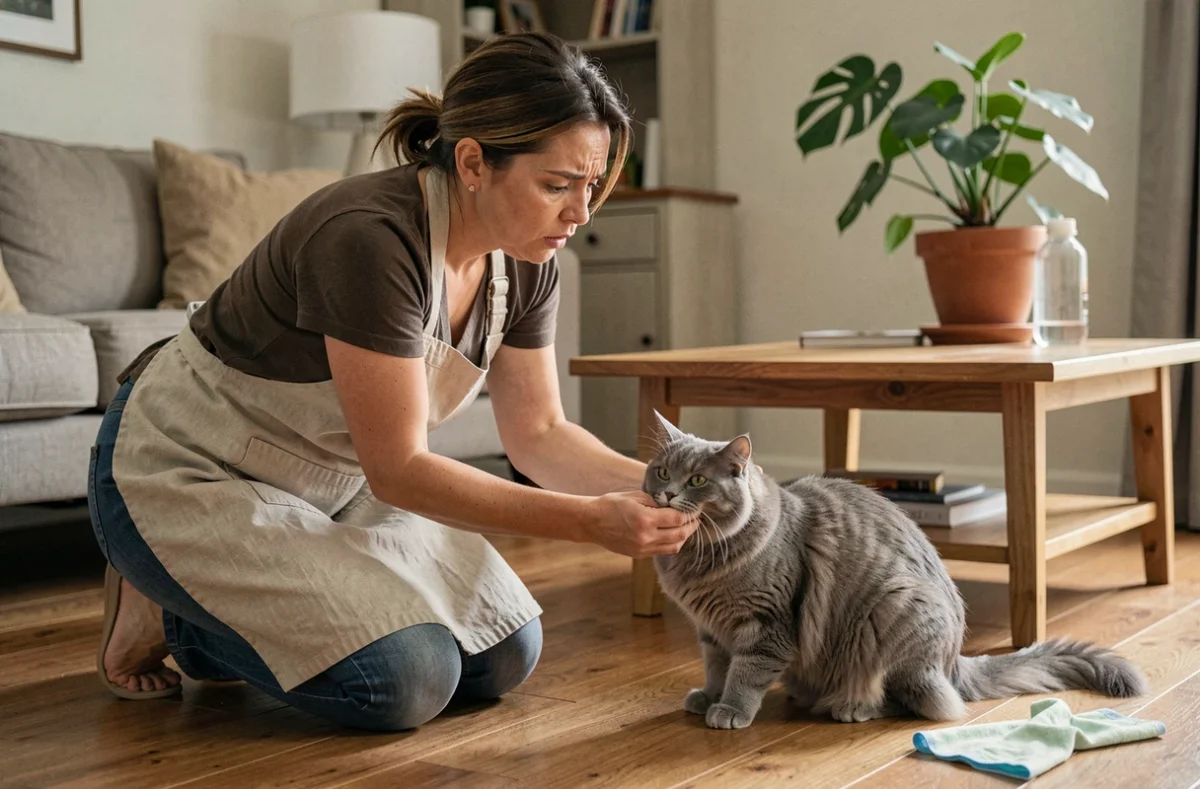
The danger does not only come from ingestion. A cat can inhale microdroplets dispersed by a spray or come into contact with a wet residue on the floor. During grooming, it licks its paws and fur, absorbing what has settled there.
A cleaner made with pure white vinegar, diluted in water, remains a reasonable option. As soon as an essential oil is added, the risk profile changes. If you want to scent your home, it’s better to do so in a room where the cat does not have access, and without mixing these products with your cleaning solution.
White vinegar against cat urine: real effectiveness on old stains
White vinegar works well on a fresh urine stain on a hard surface (tile, linoleum). Acetic acid neutralizes some surface odors and loosens light residues.
For older accidents, the situation is different. On carpet or fabric, urine seeps deep and forms uric acid crystals. White vinegar does not reach these crystals embedded in the fibers. The odor may seem diminished right after cleaning, then return after a few days, especially in humid weather.
Why does this distinction matter? Because a cat that still perceives the residual odor of its urine will return to mark the same spot. Cleaning with vinegar then gives the illusion of a problem solved, while the marking cycle continues.
For embedded stains, specific enzymatic cleaners break down uric acid deeply. Vinegar remains useful as a first step on hard surfaces, but not as a sole solution on textiles.
White vinegar and disinfection: a common confusion among cat owners
Cleaning and disinfecting are two distinct actions. White vinegar cleans: it removes dirt, limescale, and some odors. It does not reliably disinfect.
After a feline infectious disease, vinegar does not replace a registered disinfectant. Conditions like feline panleukopenia or cat flu require thorough disinfection of bowls, litter boxes, and contact surfaces. Acetic acid at the concentration of common household vinegar does not eliminate all the pathogens involved.
Here are the situations where white vinegar is sufficient, and those where it is not:
- Regular maintenance of a healthy cat’s litter box: diluted vinegar is suitable, followed by rinsing with clear water and complete drying before replacing the litter.
- Daily cleaning of bowls: vinegar can complement a soap wash, but thorough rinsing is necessary to prevent the acidic taste from deterring the cat from eating.
- Disinfection after an illness, an open abscess, or the arrival of a new cat with unknown health status: use an appropriate veterinary disinfectant, following the contact times indicated on the product.
White vinegar retains its place in the regular maintenance of a household with a cat, provided it is used alone, diluted, and surfaces in direct contact with the animal are thoroughly rinsed. The real traps lie in risky mixtures, recipes with essential oils, and the confusion between cleaning and disinfection. Keeping these distinctions in mind protects your feline much more effectively than changing products.