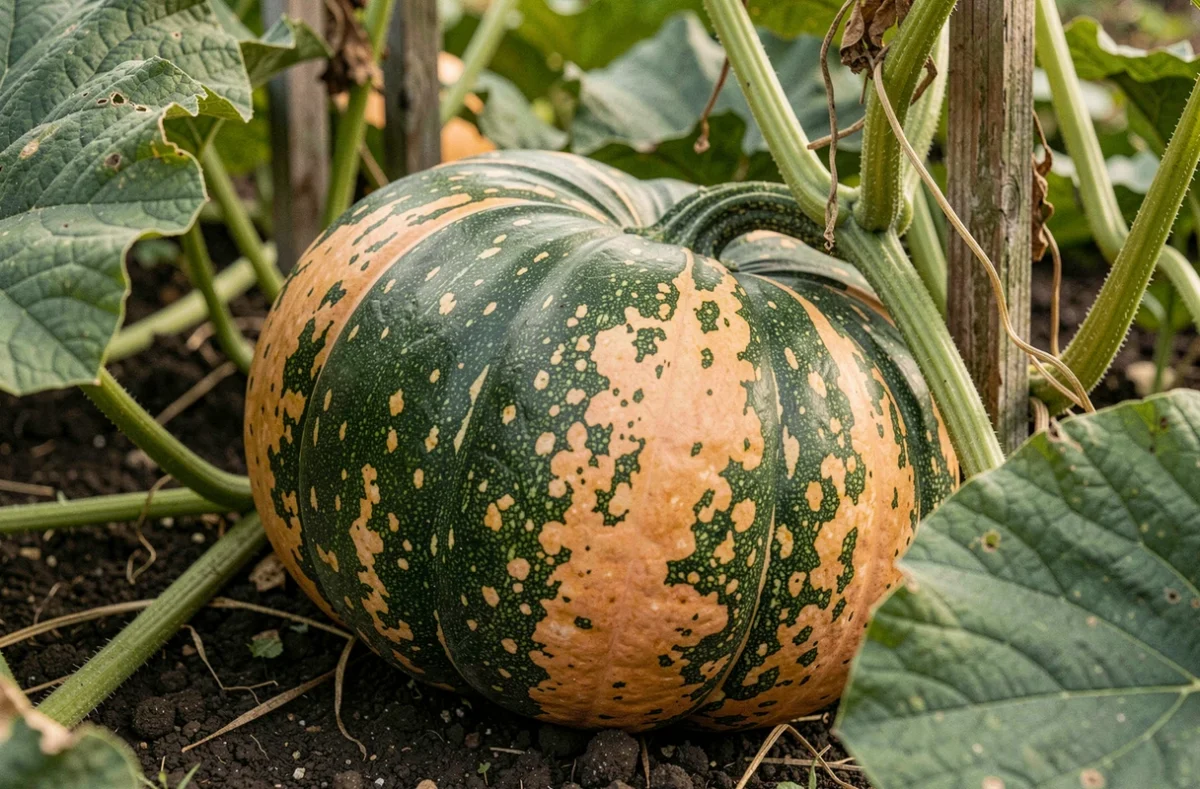
A pumpkin that remains green at the end of the season almost always indicates a mismatch between the date of fruit set and the available maturation window. The problem is not the sowing, but the timing of when the fruit set on the plant. Understanding this mechanism allows for intervention before frost makes any correction impossible.
Late fruit set and heat sum: the real limiting factor
The coloration of a pumpkin directly depends on the time elapsed between pollination and harvest. According to Utah State University Extension, a fruit needs 45 to 55 days after flowering to reach maturity. A flower fertilized in August in regions with a short autumn will therefore produce a fruit that will not have time to turn orange before the first frosts.
We regularly observe this mismatch on overly vigorous plants that continue to produce female flowers late in the season. Energy is dispersed among several fruits instead of concentrating on those already formed. This is where the pruning of late flowers comes into play: removing any new flower after mid-August (in temperate climates) forces the plant to redirect its resources to the existing fruits.
If you are looking to understand why a pumpkin remains green, the date of fruit set is the first parameter to check, well before exposure or watering.
Naturally green or bicolor varieties
Not all cucurbits turn orange. Some pumpkin varieties remain green, striped, or bicolor at full maturity. Before diagnosing a delay in maturation, we recommend checking the expected color for the sown cultivar. A Musquée de Provence remains bronze green, while a Blue Hubbard leans towards gray-blue. Confusing varietal color with a maturity defect leads to harvesting too late and unnecessary losses.
Maturity diagnosis on the plant: peduncle, rind, and sound
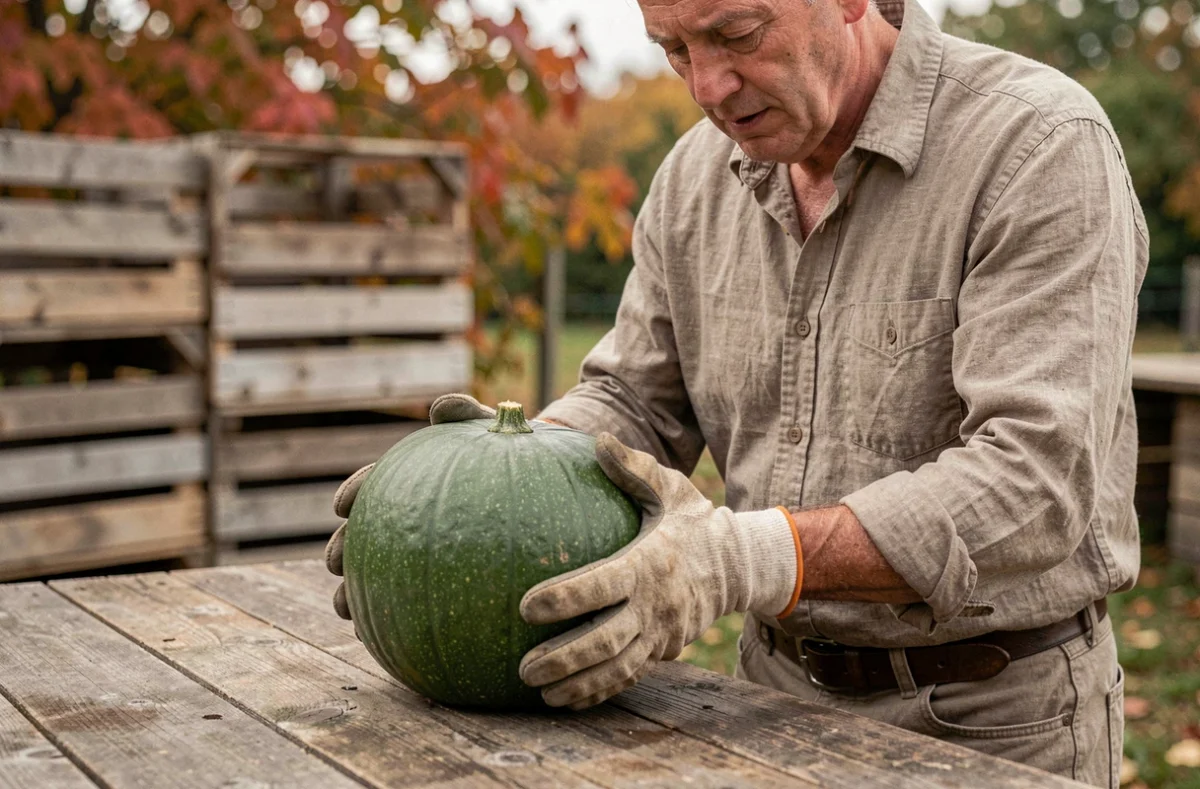
Color alone is never enough to assess the maturity of a pumpkin. Reliable diagnosis relies on three cross-checked criteria that we systematically use in the vegetable garden:
- The peduncle must be dry, hard, and starting to lignify. A still green and soft peduncle indicates that the fruit is still drawing sap and has not completed its cycle.
- The rind resists pressure from the nail. If you can easily mark it, the fruit is immature. A hard rind protects the flesh and allows for prolonged storage.
- The sound produced by lightly tapping the fruit should be hollow. A dull and muffled sound betrays flesh that is still waterlogged, a sign of immaturity.
These three combined indicators are more reliable than any colorimetric observation. A fruit may show residual green areas while being perfectly ripe if the peduncle is woody and the rind is hard.
Accelerating maturation in the garden before frost
Frost is an irreversible limit. A pumpkin exposed to negative temperatures suffers cellular damage that compromises both maturation and preservation. Harvesting before the first frost is an absolute priority, even if the fruit has not reached its final color.
Forcing tunnel and reflective mulching
Installing a plastic tunnel over the pumpkin plants significantly increases the temperature at the soil level and around the fruits. This thermal gain can make the difference between a fruit that finishes its coloration and one that remains green. We recommend pairing the tunnel with a light-colored mulch (wheat straw or reflective film) to reflect light back onto the underside of the fruit.
Removing large leaves that directly shade the fruits also speeds up the process. Direct sunlight on the rind stimulates the synthesis of carotenoid pigments responsible for the orange color.
Pruning new shoots and limiting fruits
A plant bearing more than two or three good-sized fruits does not have the resources to bring them all to maturity. Limiting the number of fruits per plant to two or three accelerates the maturation of those that remain. Cut off secondary stems that do not bear formed fruit: they consume energy without contributing to the harvest.
Post-harvest curing: evolving a harvested green pumpkin
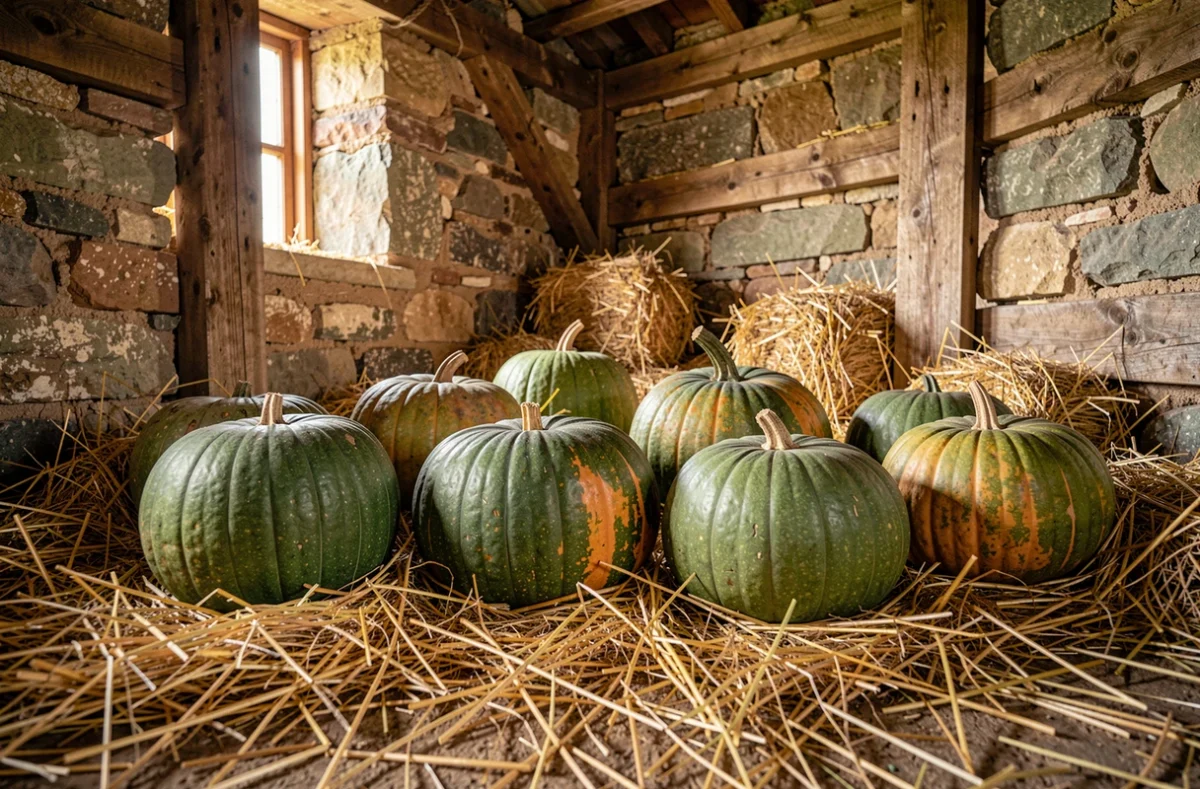
Curing and storage are two distinct steps that many gardeners confuse. Curing aims to harden the rind and heal micro-injuries, not to ripen a fundamentally immature fruit. A pumpkin harvested slightly early, with a peduncle that was starting to dry, can finish its coloration during this phase. In contrast, a fruit harvested very green with a still tender peduncle will never become a quality squash, regardless of the curing time.
Suitable curing conditions
Place the fruits in a dry, well-ventilated area at a stable temperature around the ambient temperature of a heated room. Humidity should remain moderate to prevent the development of mold. The usual duration of curing is a few weeks, during which the rind hardens and sugars concentrate in the flesh.
- Keep the peduncle intact during harvest. A fruit without a peduncle is an open door to pathogens.
- Never carry the fruit by the peduncle: the risk of tearing weakens the attachment area.
- Space the fruits to allow air circulation between them and avoid damp contact areas.
After curing, pumpkins should be stored in a cool, dry place. Fruits whose rind remains soft after this period will not keep and should be consumed quickly or processed.
A green pumpkin in autumn is not lost if the peduncle showed signs of lignification at the time of harvest. Curing can complete the transition. However, a fruit harvested prematurely after a frost or with a still tender rind will not catch up once off the plant. The best strategy remains to anticipate from the fruit set: prune late flowers, limit the number of fruits, and protect the crop from the cold.