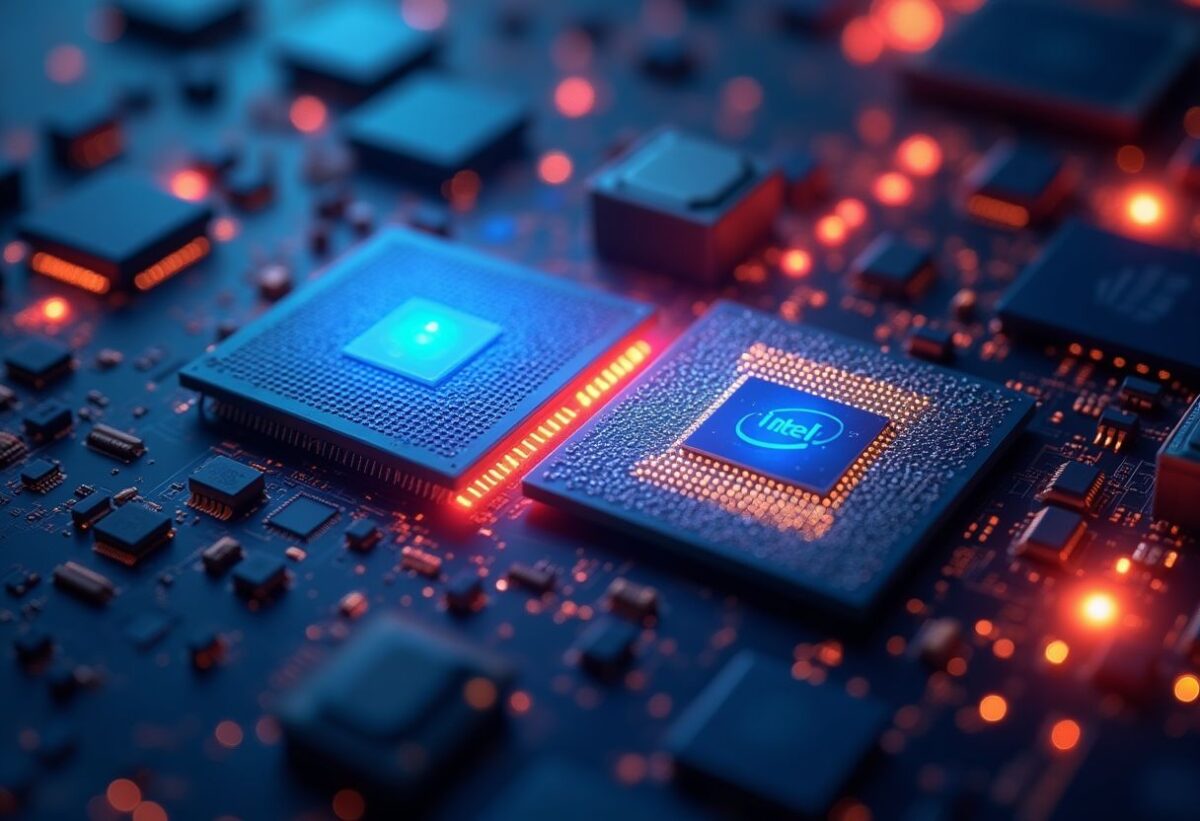
In the ever-evolving universe of artificial intelligence, choosing a high-performance processor is essential for ensuring fast and efficient calculations. Two giants share this strategic market: Intel and AMD. These historical players in the semiconductor industry offer various solutions, each with its own strengths and weaknesses. Faced with this array of options, determining the most suitable processor for intensive AI computing tasks is a major challenge. Choosing between Intel and AMD requires not only an understanding of the technical specifications of each brand but also their respective approaches to artificial intelligence technologies.
Raw Performance: The Duel of Titans
When it comes to intensive computing, the raw performance of a processor is often the first characteristic examined. Intel and AMD compete for the title of the most powerful, each presenting strong arguments.
With its Intel Core and Xeon series, Intel highlights its ability to deliver high clock speeds and proven stability. Intel processors are often favored for tasks requiring significant computing power due to their exceptional single-core performance. On the other hand, AMD Ryzen and EPYC processors stand out with a high number of cores and threads, allowing for more efficient parallel processing and better management of multithreaded workloads.
- Intel Xeon: known for its reliability and advanced management options, ideal for servers and data centers.
- AMD EPYC: often chosen for cloud computing solutions and scalable infrastructures due to its ability to handle many tasks simultaneously.
Energy Efficiency: A Major Issue
In the context of data centers and industrial facilities, energy efficiency is not just a marketing argument; it is an economic and ecological necessity.
- Intel has made significant progress in energy consumption, particularly with its newer processor architectures that optimize performance while reducing energy needs.
- AMD has focused on energy efficiency with its Infinity Fabric technology, which enables fast and efficient communication between cores and modules, thus reducing overall energy consumption.
The adoption of advanced thermal and energy management technologies plays a fundamental role in the choice between these two giants for an AI industrial PC.
Compatibility and Software Ecosystem
Another determining criterion in the choice between Intel and AMD lies in the compatibility and software ecosystem supported by each processor. Users often need to align their choice with the requirements of their existing software and infrastructures.
Historically, Intel has benefited from wide compatibility with many professional software and enterprise solutions. Its collaboration with numerous tech companies ensures easy integration into various environments. In contrast, AMD has gained popularity due to its ability to deliver high performance with open-source operating systems and flexible development environments. AI developers particularly appreciate the openness and compatibility of AMD systems with research and development platforms.
Future Perspectives: Innovations and Trends
The artificial intelligence sector is evolving rapidly, and with it, data processing technologies. What are the future directions of the two giants regarding processors for AI?
Intel continues to invest in cutting-edge technologies, including integrated AI and neuromorphic processing capabilities. Its recent developments aim to further enhance the speed and efficiency of processing large amounts of data. On its part, AMD is innovating with its next-generation architectures, focusing on performance and scalability. Recent product launches demonstrate a long-term commitment to developing processors capable of adapting to the growing needs of AI solutions.
Choosing between Intel and AMD for intensive AI computing depends on many factors, ranging from raw performance to energy efficiency, as well as software compatibility and innovation prospects. Each brand offers unique solutions that meet specific needs. Understanding these differences is essential for making an informed choice that aligns your technological needs with the goals of your business or project. Whether it’s Intel for its stability and compatibility, or AMD for its parallel processing capabilities and innovation, the choice of processor remains a strategic decision at the heart of success in artificial intelligence.