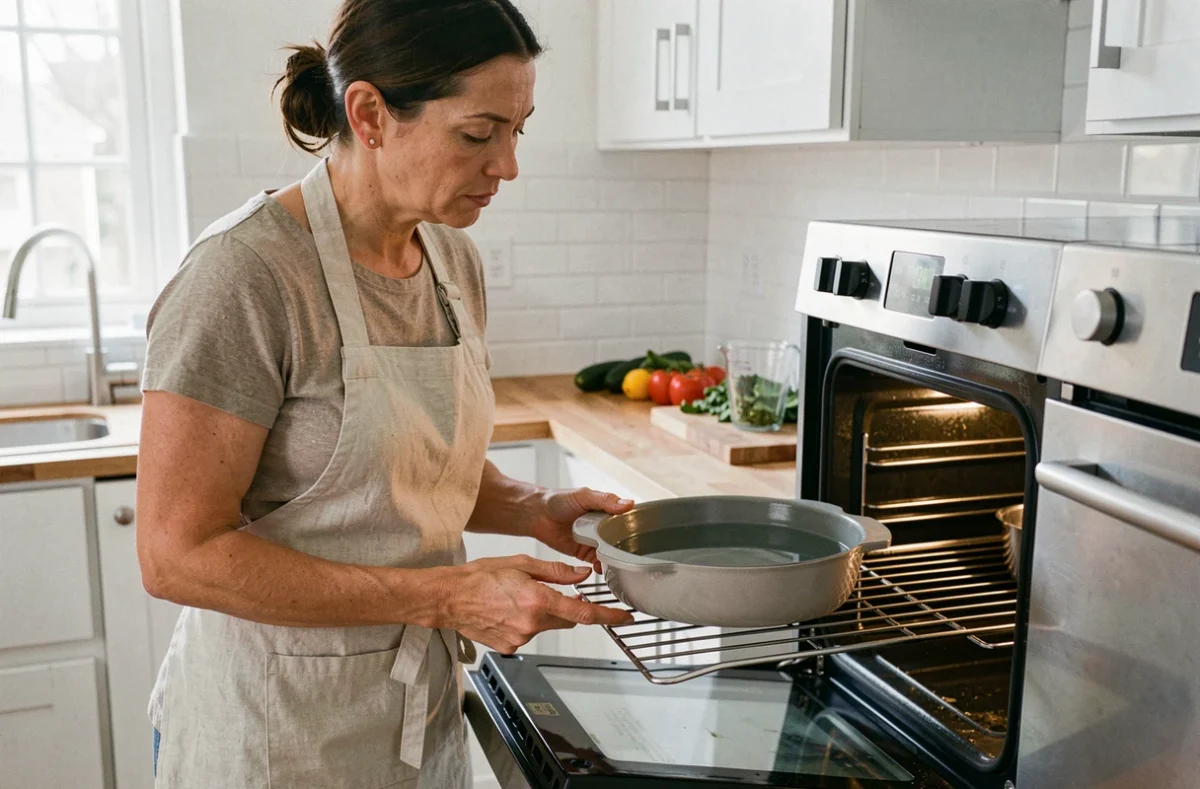
Steam cooking in a conventional oven is based on a simple physical principle, but its execution completely determines the result: maintaining a sufficient humidity level in a chamber that was not designed for this purpose. A domestic oven never becomes a true steam oven, due to the lack of a dedicated generator and humidity regulation. However, we can reproduce a controlled humid atmosphere, provided we master a few often-overlooked technical parameters.
Thermodynamic limits of a conventional oven against steam
An integrated steam oven injects steam via a reservoir and an independent heating circuit. The cavity receives a calibrated amount of humidity, continuously measured by sensors. In a conventional oven, none of this exists.
The direct consequence: the humidity produced manually (water tray, spray, ice cubes) is neither measurable nor uniform. The steam concentrates at the bottom, dissipates as soon as the door is opened, and drops sharply when the upper heating element restarts a heating cycle. We therefore work with a short useful window, generally the first few minutes after loading.
This constraint shapes the entire strategy: we need to produce maximum steam instantly, then confine this humidity for as long as possible. It is on this dual objective that the different techniques stand out, and we recommend exploring steam oven cooking methods to understand the variations suitable for each type of preparation.

Preheated cast iron pan technique for instant steam
The most reliable method to generate a steam shock in a conventional oven is to place a cast iron or thick steel container on the oven floor, then preheat it empty throughout the oven’s temperature rise.
At the time of loading, boiling water is poured into this hot pan. The vaporization is almost immediate. Cold or lukewarm water causes a less effective thermal shock and cools the oven floor, disrupting the cooking from below.
Parameters to respect
- The container must be made of thick metal (cast iron, carbon steel). Ceramic or glass may shatter under thermal shock, and thin stainless steel does not store enough heat to vaporize water quickly.
- The amount of water is limited to one glass (about a quarter of a liter). Too much water floods the oven floor, creates a puddle that takes several minutes to evaporate, and lowers the ambient temperature of the oven.
- Highly mineralized water deposits limescale on the walls and accessories. Regular use of this technique requires descaling of the internal surfaces, as manufacturers recommend for integrated steam ovens.
- The operation should be done with the door open for the least time possible. Pour, close, and do not open again for at least ten minutes.
Closed casserole and cooking dome: confining humidity without a pan
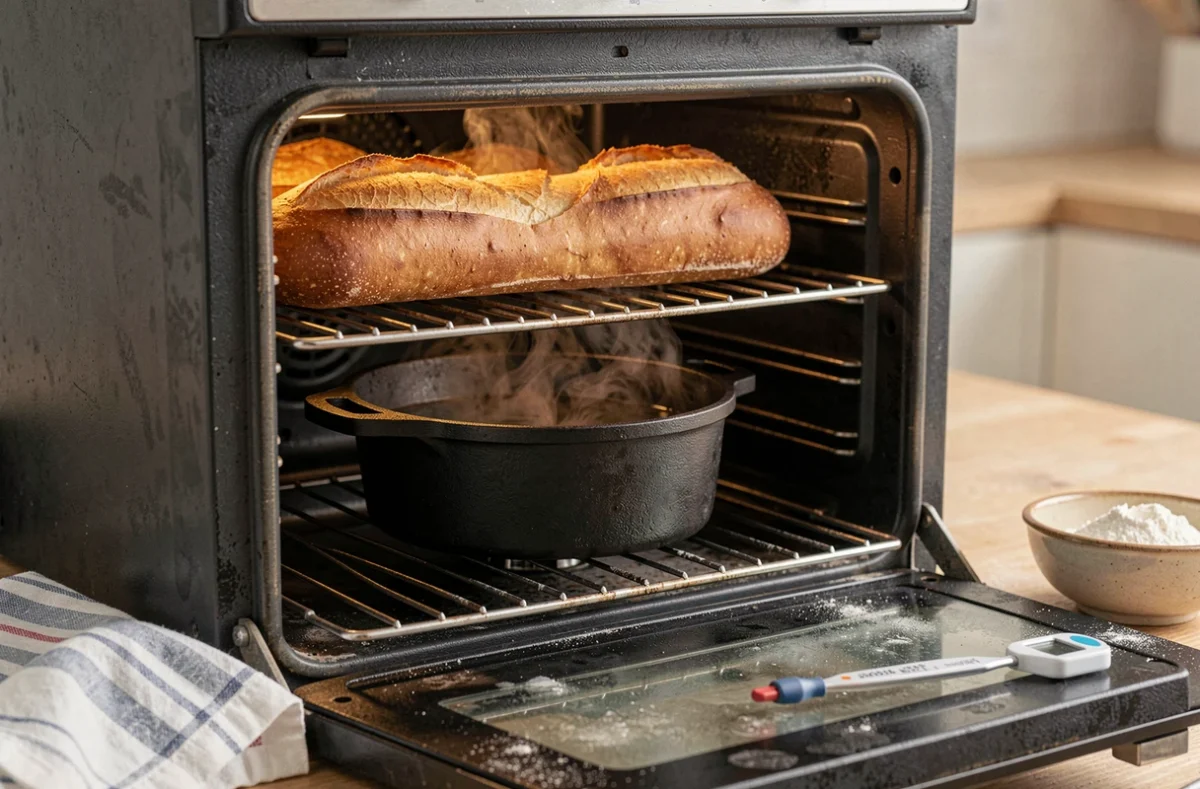
For bread making, the cast iron casserole with a lid remains the most effectively formidable technique in a domestic oven. The principle differs from the pan: here, the steam comes from the dough itself. The lid traps it in a reduced volume, which maintains a high humidity level around the dough during the critical expansion phase.
The casserole must be preheated empty to the target oven temperature. The dough is quickly placed inside, the lid is closed, and cooking continues covered for the first twenty to thirty minutes. The lid is then removed to allow the crust to form and color.
This approach bypasses the main limitation of the conventional oven: the steam does not escape. We observe results comparable to those of a professional steam oven, with open slashes and a crunchy crust, provided the casserole is large enough not to constrain the bread’s development.
Alternative: the terracotta dome
Terracotta domes like Römertopf or Emile Henry operate on the same principle. Pore-rich terracotta absorbs and then releases moisture, slightly extending the steam phase compared to cast iron. Soaking the dome in water for about fifteen minutes amplifies this effect.
Safety and maintenance: risks that recipes do not address
Steam in a conventional oven presents a concrete danger often omitted from culinary guides. Opening the door releases a cloud of high-temperature steam capable of causing severe burns to hands and face. The recommended protocol is to slightly ajar the door a few centimeters, wait for the initial steam to dissipate, then intervene with insulating gloves that cover the forearms.
In terms of maintenance, the regular production of artisanal steam accelerates the soiling of the walls and the corrosion of door seals. Limescale residues accumulate on visible heating elements and in the corners of the cavity. Cleaning with vinegar water after each steam session limits these deposits.
This cleaning should not be confused with the “Steam Clean” function present on some recent models. This cycle uses steam to soften grease on the walls, but it has nothing to do with steam cooking and does not substitute for a true steam oven.
Culinary results: which dishes truly benefit from steam in a conventional oven
Bread and pastries gain the most noticeable benefit from added steam. The crust becomes shinier and crunchier, while the crumb retains its softness. For gratins and roasted vegetables, the addition of steam at the beginning of cooking preserves texture without sacrificing final coloration.
On the other hand, dishes that require a dry atmosphere lose quality with added steam. Puff pastry, meringues, and preparations that need to dry (vegetable chips, dehydrated fruits) tolerate no additional moisture.
For meats and fish, a compromise works: start cooking with steam to limit surface drying, then finish with dry heat to achieve a satisfactory Maillard reaction. This two-step sequencing roughly reproduces what combined steam ovens offer as standard, with less precision but entirely usable results in daily cooking.