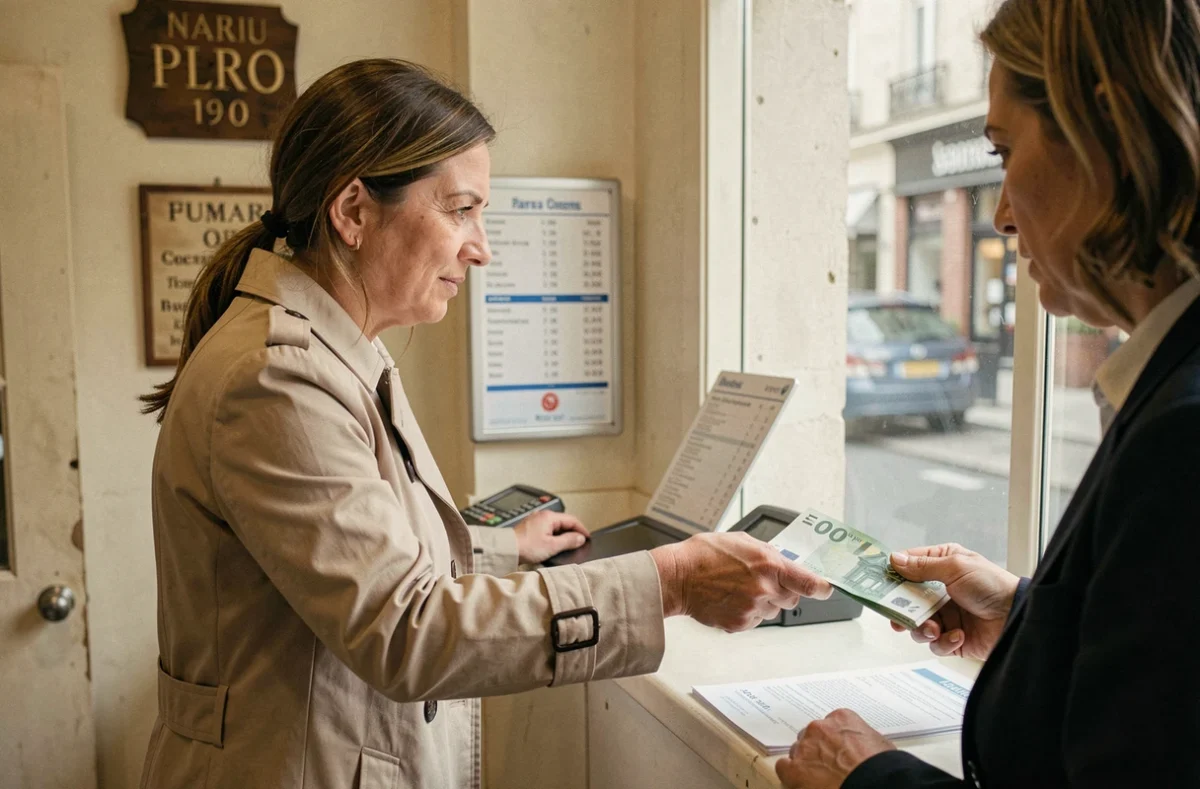
Exchanging money in Paris before a trip or upon arrival in France seems simple. In practice, the cost difference between two exchange offices on the same street can amount to several dozen euros on a transaction worth a few hundred. Understanding where that difference comes from helps you choose the right option without wasting time or money.
Exchange rate margins: the real cost no one advertises
Have you noticed that some exchange offices in Paris advertise “0% commission”? That promise doesn’t mean the transaction is free. The margin is often built directly into the rate offered, making it invisible unless you compare rates.
The interbank rate—the rate banks use when trading with one another—is the benchmark. No exchange office will give you that exact rate. Every currency exchange provider adds a margin, sometimes modest, sometimes substantial. An office advertising zero commission but offering a rate far below the interbank rate costs more than a competitor that charges a small commission on a more competitive rate.
Before any transaction, French regulations require the exchange provider to tell you the net rate that applies, including fees. You must also receive a receipt after the exchange. If an office refuses to provide this information before the transaction, take your business elsewhere.
The most reliable approach: check the interbank rate online just before you head out, then compare it with the rate displayed by the exchange office. The smaller the difference, the better the deal. An exchange office near the Paris Bourse generally offers more competitive margins than those in heavily touristed areas.
Exchange offices in Paris: the neighborhoods with better rates
Not all Paris neighborhoods are equally good for exchanging currency. Exchange offices near train stations and airports offer the least favorable rates. Their customers, often in a hurry with few alternatives, are more likely to accept high margins.
Independent exchange offices in central arrondissements (around the Marais, the Bourse and Châtelet) often offer more competitive rates. Their business model relies on transaction volume rather than a high margin on each transaction.
What sets a good exchange office apart
- A rate displayed in real time and updated daily, which you can check before setting out on the office’s website or by phone.
- No extra fees on top of the advertised rate: no “processing fees” or disproportionate minimum transaction amounts.
- A sufficient supply of common currencies (US dollars, British pounds, Swiss francs), with the option to reserve less commonly requested currencies.
- A receipt provided for every transaction, detailing the rate applied, the amount exchanged and any fees.
For an uncommon currency, the availability of banknotes matters just as much as the rate. Call the office the day before to check its stock and avoid an unnecessary trip.
Multi-currency card or cash: which to choose for your situation
Exchanging cash at an office in Paris isn’t always the best option. Multi-currency cards use the interbank rate or one very close to it, with no visible margin on each payment.
Offered by providers such as Wise and Revolut, these cards let you pay abroad in the local currency without standard conversion fees. They’re particularly well suited to everyday expenses (restaurants, transport, shopping) and modest withdrawals from local ATMs.
When cash is still useful
Some destinations still rely heavily on cash. In that case, exchanging part of your money in Paris can make sense, especially to cover your first few days. Using a mix of cash and a multi-currency card helps limit both risks and costs.
If you’re exchanging a large amount, bring an ID document. Anti-money laundering rules require identity checks above a certain threshold. And if you leave France carrying more than 10,000 euros in cash, you must declare it to customs.
Dynamic Currency Conversion (DCC): the ATM trap to avoid
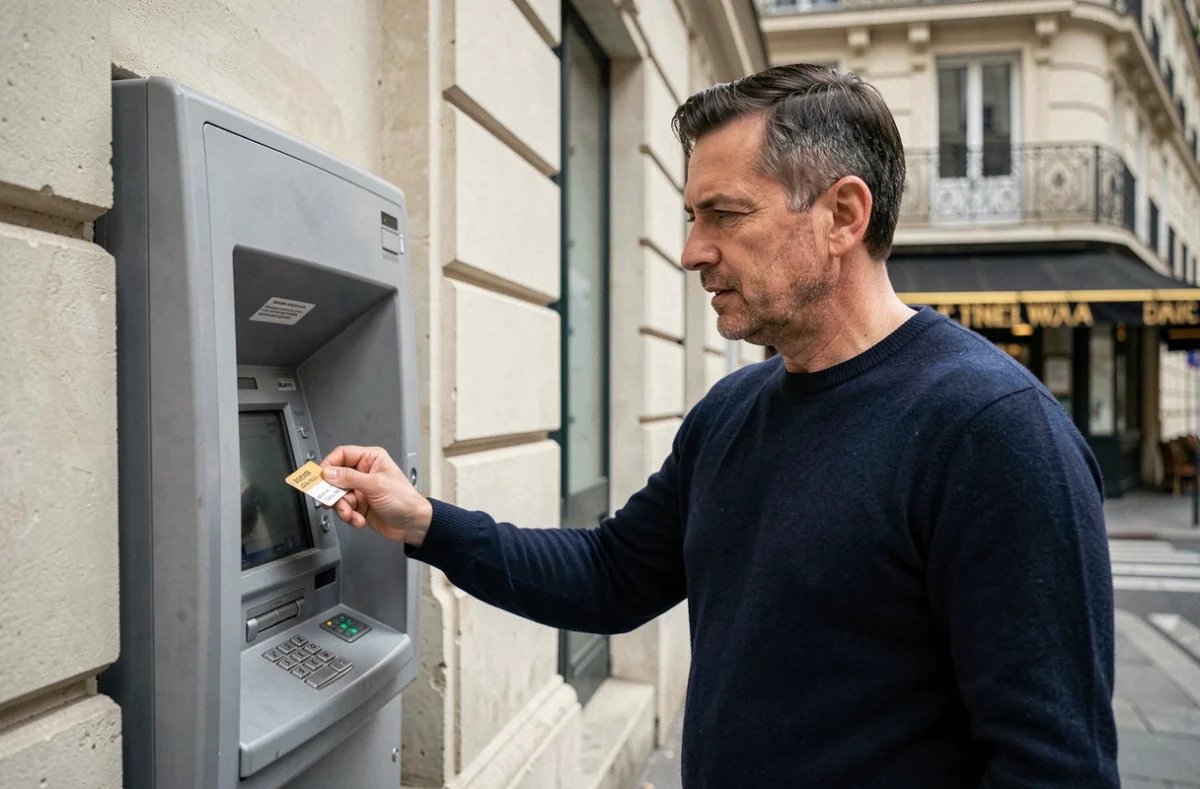
This trap doesn’t involve exchange offices, but it can be costly for travelers withdrawing foreign currency from an ATM abroad. Dynamic Currency Conversion (DCC) offers to charge you in euros instead of the local currency.
The DCC rate is set by the merchant or ATM operator, not your bank. It’s almost always unfavorable. When a payment terminal or ATM asks you to choose between euros and the local currency, always select the local currency. Your bank (or multi-currency card) will handle the conversion at a much better rate.
This simple habit, combined with a card that charges no foreign exchange fees, can significantly reduce the total cost of your currency transactions.
Planning your currency exchange in Paris: a three-step approach
Check the interbank rate for the currency you need on the day of your transaction using a reputable financial website. Make a note of the rate.
Next, compare the rates displayed by two or three exchange offices in Paris, prioritizing those outside tourist areas and airports. Calculate the difference between the rate offered and the interbank rate: that’s your actual conversion cost.
Use a multi-currency card for everyday payments at your destination. This combination offers the best balance of convenience and savings, wherever you’re headed.
There’s no shortage of currency exchange options in Paris. The difference between a good and a bad deal rarely comes down to luck. It comes down to taking five minutes to compare rates before you head out.