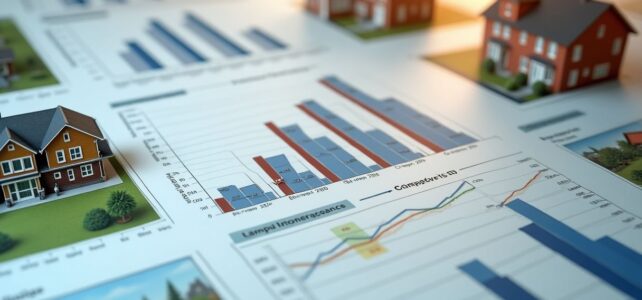
In the complex world of real estate, property valuation is an essential step that can seem both technical and subjective. Whether for selling, buying, or refinancing, knowing the precise value of a property is fundamental. Errors in this valuation can lead to significant financial losses. Yet, many are unaware of the criteria and methods used to establish this value. What are the elements that truly influence the price of a property? How can one ensure that the estimate is accurate?
Criteria Influencing Property Value
Properly estimating a property is not done randomly. Several criteria play a determining role in setting its value. Understanding these elements is essential for making an accurate assessment.
- Location: This is often the most influential factor. A property located in a sought-after neighborhood, with accessible amenities, will have a higher value. Proximity to transportation, schools, and shops is crucial.
- The general condition of the property: A well-maintained property, with no work needed, will sell better than one requiring renovations.
- Size and layout: The larger the property, the higher its value. The layout of the rooms, the brightness, and outdoor spaces such as gardens or terraces also add value.
- The economic context: Trends in the real estate market, interest rates, and the overall economic situation can influence a property’s valuation.
Valuation Methods
To determine the value of a property, several methods can be implemented. Each approach has its own characteristics, advantages, and limitations.
The comparative method involves analyzing similar properties sold recently in the same geographical area. It is often favored for its pragmatic and immediate aspect. Real estate agents frequently use this method to propose a realistic price.
On the other hand, the income method is more relevant for rental properties. It is based on the future profitability of the property. Investors and real estate professionals often focus on this model to estimate a property’s value.
For new constructions, the cost method is preferred. This calculates the value by adding the cost of the land to the construction cost, while considering any potential depreciation of the building.
Available Tools and Resources
Several digital tools and physical resources are available to help individuals and professionals accurately assess a property.
- Online simulators: These platforms allow for a quick estimate by entering basic information about the property. While convenient, their accuracy depends on the quality of the data provided.
- Expert reports: Consulting a real estate expert for a detailed valuation report is often the most reliable method. These experts take into account all aspects of the property and its environment.
- Real estate agencies: They have in-depth knowledge of the local market and can provide estimates based on recent similar sales.
Common Mistakes to Avoid When Estimating
Proceeding with the valuation of a property without precautions can lead to biased results. Here are some common mistakes to avoid.
Relying solely on one valuation method is a mistake. Combining several approaches often provides a more complete and accurate view of the property’s true value.
Underestimating the impact of renovations is a frequent error. Renovations can significantly increase a property’s value, but it is important to assess whether the investment will be profitable in the long term.
It is also essential not to overlook the impact of economic conditions on the real estate market. A rapidly changing context can affect demand and, consequently, valuation.
Finally, remaining objective and not letting emotional attachment to the property influence the assessment is crucial. Sentimental value should never interfere with financial evaluation.