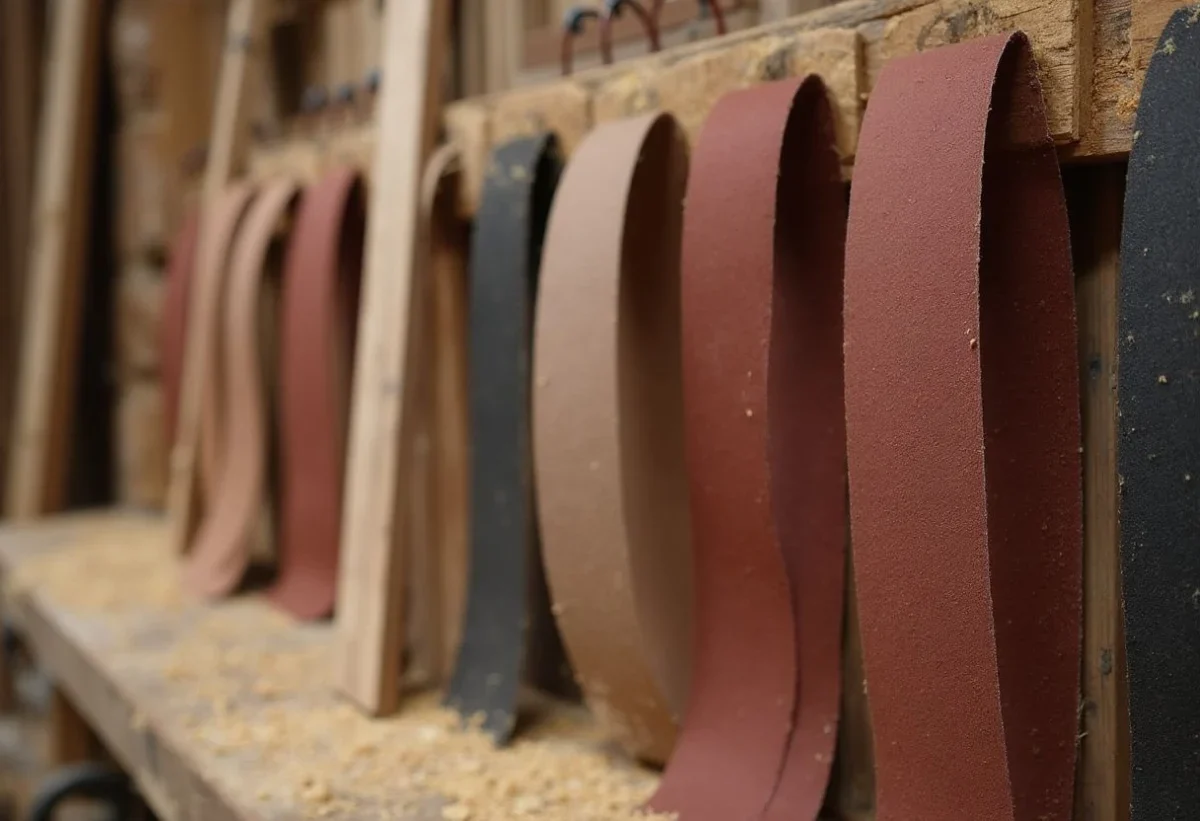
The smooth and polished surfaces we encounter every day are often the result of meticulous sanding and polishing work. Behind this perfect appearance lies an essential tool: the sanding belt. Used in many sectors, it plays a vital role in transforming raw materials into perfectly finished works. Whether in the woodworking, metallurgy, or even cutlery industries, the sanding belt is an indispensable tool.
Understanding the composition and functioning of the sanding belt
To fully exploit the capabilities of the sanding belt, it is essential to know its composition and functioning. Sanding belts are generally made up of three main elements: the backing, the abrasive, and the adhesive.
- The backing is often made of paper, fabric, or fiber, providing the necessary flexibility to adapt to the surfaces being worked on.
- The abrasive is generally aluminum oxide, silicon carbide, or zirconium grains, chosen according to the hardness and precision required.
- The adhesive ensures the attachment of the abrasive grains to the backing.
Each element is carefully selected to guarantee optimal durability and maximum performance, allowing for effective and controlled abrasion.
The diverse applications of the sanding belt
The versatility of the sanding belt makes it a preferred tool for a multitude of industrial and artisanal applications.
In the field of carpentry, it is used to smooth wood and prepare surfaces before applying finishes. Craftsmen appreciate it for its ability to create flawless surfaces without compromising the integrity of the material.
In metallurgy, it is essential for metal processing. The sanding belt allows for the removal of imperfections, shaping metal parts, and preparing surfaces for welding or painting.
For cutlery, a sanding belt is used to refine blades and ensure a perfect edge, essential for high-quality knives.
Choosing the right sanding belt for the job
The choice of the appropriate sanding belt can make the difference between a mediocre finish and a masterful job. Several factors should be considered when selecting the ideal sanding belt.
- Type of material to be worked on: choose a belt with the appropriate abrasive. Aluminum oxide is often preferred for wood, while silicon carbide is better suited for metals.
- Abrasive grain: the finer the grain, the more it is suited for smooth finishes. Coarser grains are used for quickly removing material.
- Belt dimensions: the size should match the tool being used, whether it is a belt sander or another type of machine.
By choosing wisely, you can maximize the efficiency of your work while preserving the quality of your materials.
Tips and tricks for optimal use of sanding belts
Effective use of the sanding belt requires some practical tips that can significantly enhance the quality of your work.
It is essential to always start with a coarser grain to eliminate major defects before moving on to finer grains for polishing. This allows for a more uniform and defect-free surface. Avoid applying excessive pressure, as this can wear out the belt quickly and damage the surface. A smooth and steady motion will ensure even abrasion.
Finally, make sure to regularly clean the sanding belt during use to remove residues that could reduce its effectiveness.
Mastering the sanding belt opens the door to a multitude of creative possibilities. Whether you are a seasoned professional or a passionate amateur, understanding and using this tool with precision can transform your projects and create pieces of exceptional quality.