A cairn is an intentional stack of stones built without mortar or binding material. This structure appears on every continent, from Arctic plateaus to Alpine passes, serving different purposes depending on the era and culture: a navigation marker, a funerary monument, a place for prayer, or simply a contemplative gesture. Understanding what distinguishes these uses offers insight into a practice that dates back thousands of years and remains alive on trails and in spiritual traditions.
Trail cairns or spontaneous stone stacks: how to tell them apart in the field
Two types of stone stacks can be found along mountain trails. The first, built by guides, shepherds, or trail managers, serves as a navigation marker in areas without painted trail blazes. The second is the result of an individual gesture, often aesthetic or meditative, with no connection to the official route.
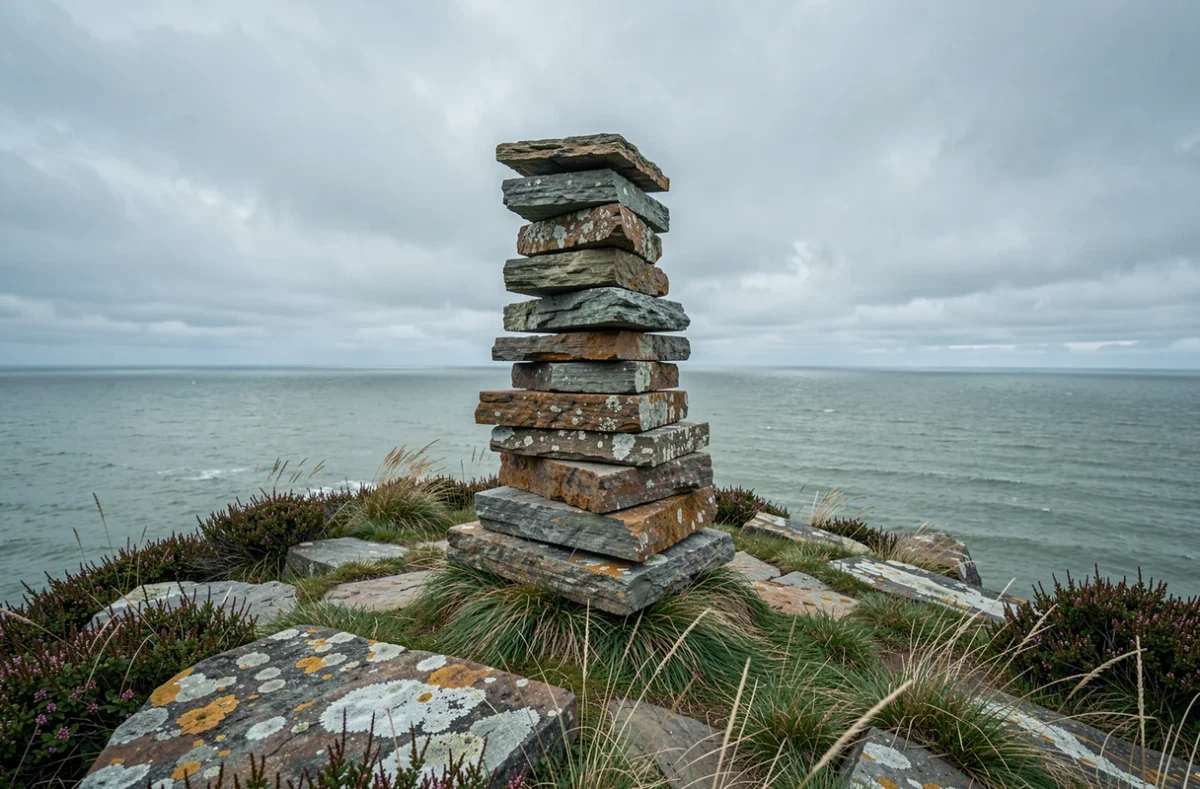
Several clues can help you tell them apart. A trail cairn is placed at a strategic point: a fork, ridge, scree crossing, or area where the trail becomes harder to see. It is generally conical or pyramid-shaped, with a wide base and stones selected for their stability. It is part of a series: other similar cairns mark the same route at regular intervals.
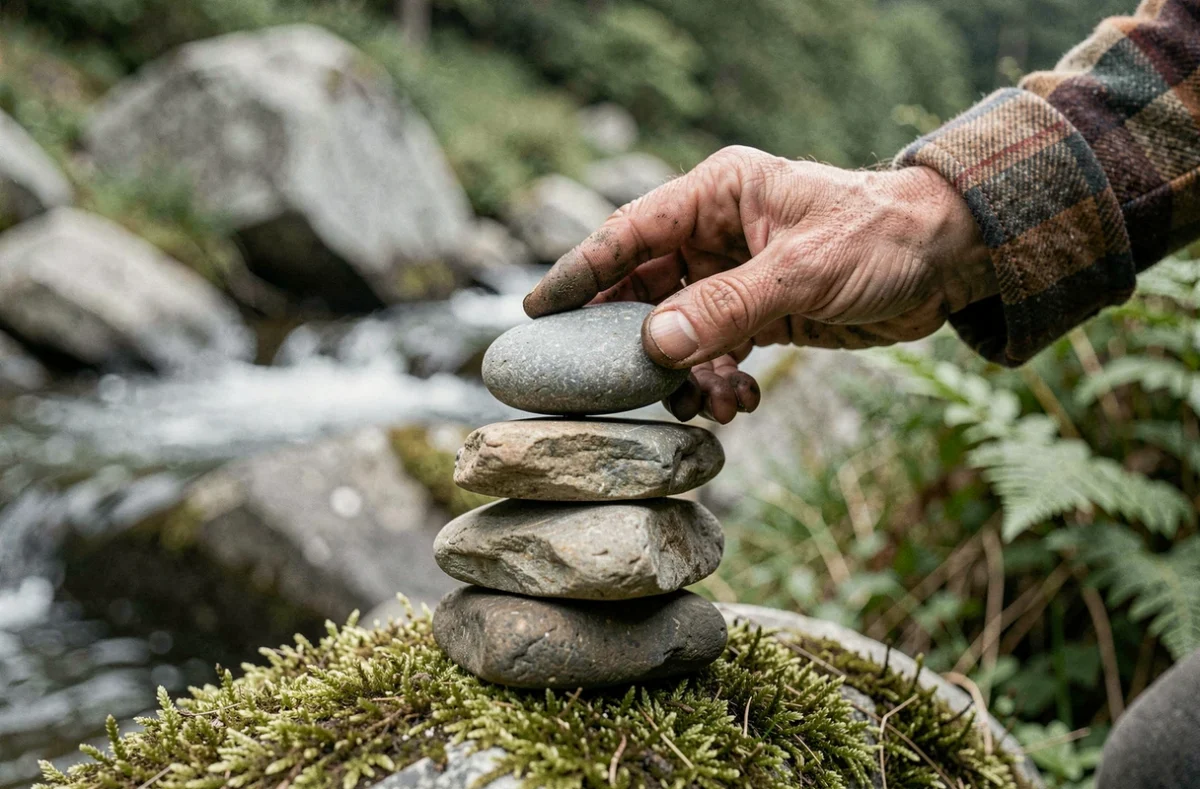
A spontaneous stack, by contrast, often appears beside a river, on a pebble beach, or near a popular viewpoint. Its structure is more fragile, sometimes a narrow column, and it follows no route-marking logic. Exploring the meaning of stacked stones helps explain why these two gestures, despite their visual similarity, stem from very different motivations.
When you come across an isolated cairn in the mountains, the best rule is simple: don’t dismantle it, as it may be guiding other hikers. In sensitive natural areas, however, adding stones to a decorative stack can cause real harm.
Impact on nature: why stacking stones is not harmless
Moving stones in natural environments alters the microhabitats that form beneath and between them. Turning over a river pebble exposes aquatic insect larvae, fish eggs, and small invertebrates that depend on this shelter. Along riverbanks, stones stabilize the substrate and help limit erosion.
Every stone moved destroys a microhabitat for local wildlife. In coastal areas, the impact multiplies when dozens of visitors repeat the same gesture in the same place. Natural area managers have observed that the spread of spontaneous stone stacks can also make it harder for hikers to read the terrain when they rely on official cairns for navigation.
- Along waterways, stones shelter organisms that live attached to their undersides (larvae, mosses, lichens).
- On mountain trails, a cairn added away from the route can mislead hikers and lead them into a dangerous area.
- In nature parks, some local regulations prohibit building new stone stacks to protect the landscape and habitats.
The most respectful approach is to observe existing cairns without adding to them, unless an official trail marker asks you to do so during a guided outing.
Cairn traditions and symbolism across cultures
Stone stacks carry different meanings depending on their cultural context. Traditions are not interchangeable: drawing parallels between two geographically distant practices without explaining their specific contexts erases what makes each one unique.
Inuksuk in the Canadian Arctic
The word inuksuk comes from Inuktitut: inuk (human being) and the suffix -suk (acting in the place of). These structures served as navigation markers, indicating a campsite, a water source, or a hunting ground. Some inuksuit also had a spiritual purpose, embodying the Inuit connection to their land and ancestors.
Inuit tradition forbids the destruction of an inukshuk. This rule explains why structures centuries old still stand in the Canadian Arctic, making each stone stack a cumulative repository of collective memory.
Tibetan cairns and religious layers
In Tibet, cairns reflect at least two distinct layers of tradition. The pre-Buddhist Bön layer associates stone stacks with local spirits and the protection of mountain passes. The Buddhist layer adds a dimension of spiritual merit: each stone placed accompanies a prayer or mantra.
Stones along the Camino de Santiago
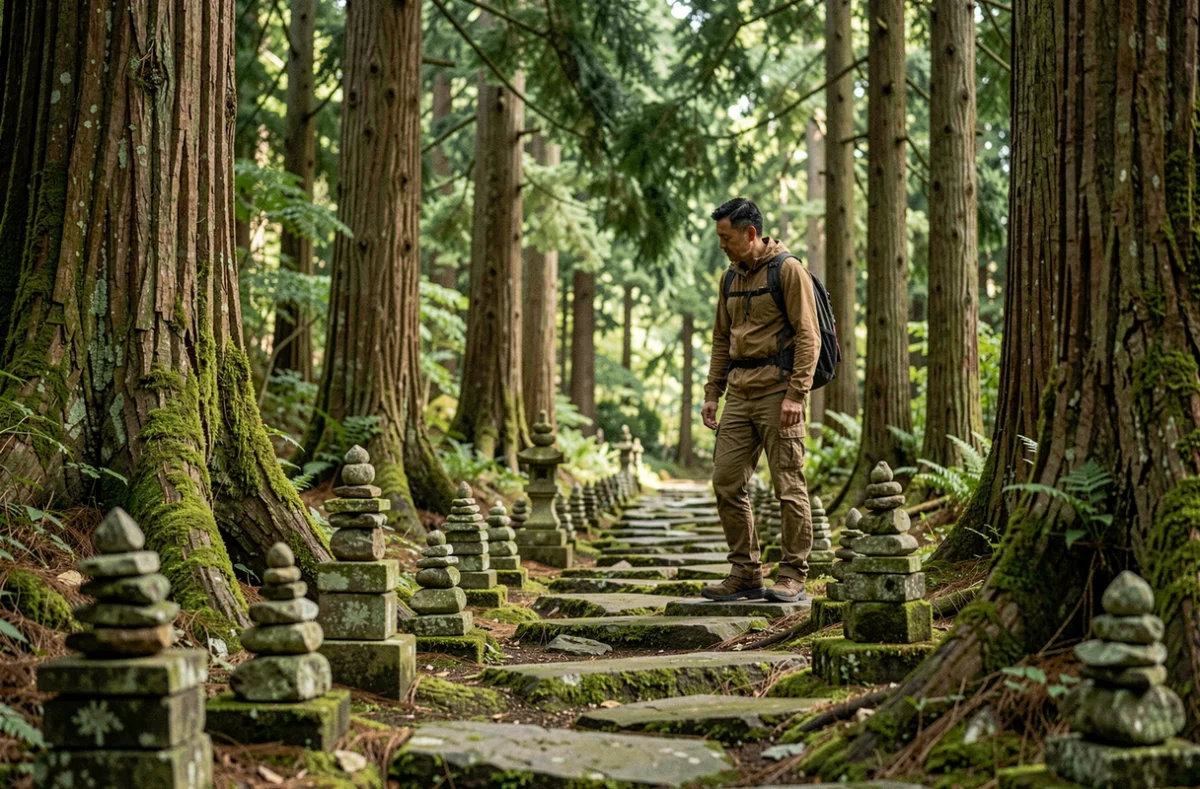
Along the routes to Compostela, pilgrims leave stones at symbolic sites such as the Cruz de Ferro on the French Way. The gesture is associated with the idea of letting go of a burden. The stone represents an inner weight that the walker leaves behind on the path.
Stacked stones and Zen practice: symbolic balance or ephemeral art
Balancing stones, sometimes called stone balancing, is a more recent contemplative practice. It involves placing stones on top of one another using their natural points of contact, without glue or supports. The result, often photographed, is widely shared on social media.
This gesture is part of a search for mindfulness in the present moment. The concentration required to find the balance point creates a meditative state similar to that found in some Zen practices. The temporary nature of the construction (wind or water will eventually topple it) reinforces this sense of letting go.
The line between ephemeral art and damage to the natural environment is a fine one. Aesthetic appeal does not justify moving large quantities of pebbles in a fragile ecosystem. The most conscientious practitioners put the stones back after their session, limiting their impact on the site.
Cairns have endured through the ages because they meet fundamental needs: finding one’s way, honoring a place, and marking a passage. Their apparent simplicity conceals specific cultural and ecological contexts. When you encounter a stack of stones, the first question to ask is what it is for: navigation, remembrance, prayer, or decoration. The answer determines what you should do with it.