Some Parisian chefs refuse to serve a dish whose sauce has not simmered for at least three hours, while in Bordeaux, a handful of restaurants are dedicated to highlighting forgotten recipes from the Southwest. In Marseille, family-run establishments are passed down more often than the secrets of making a bouillabaisse.
In reality, few restaurants labeled as “artisanal” allow themselves a fixed menu. Their offerings evolve with the seasons and discoveries, often in close collaboration with local producers. These places, sometimes discreet, carve out their own niche far from standardized ready-to-eat meals.
Why artisanal French cuisine still captivates gourmets
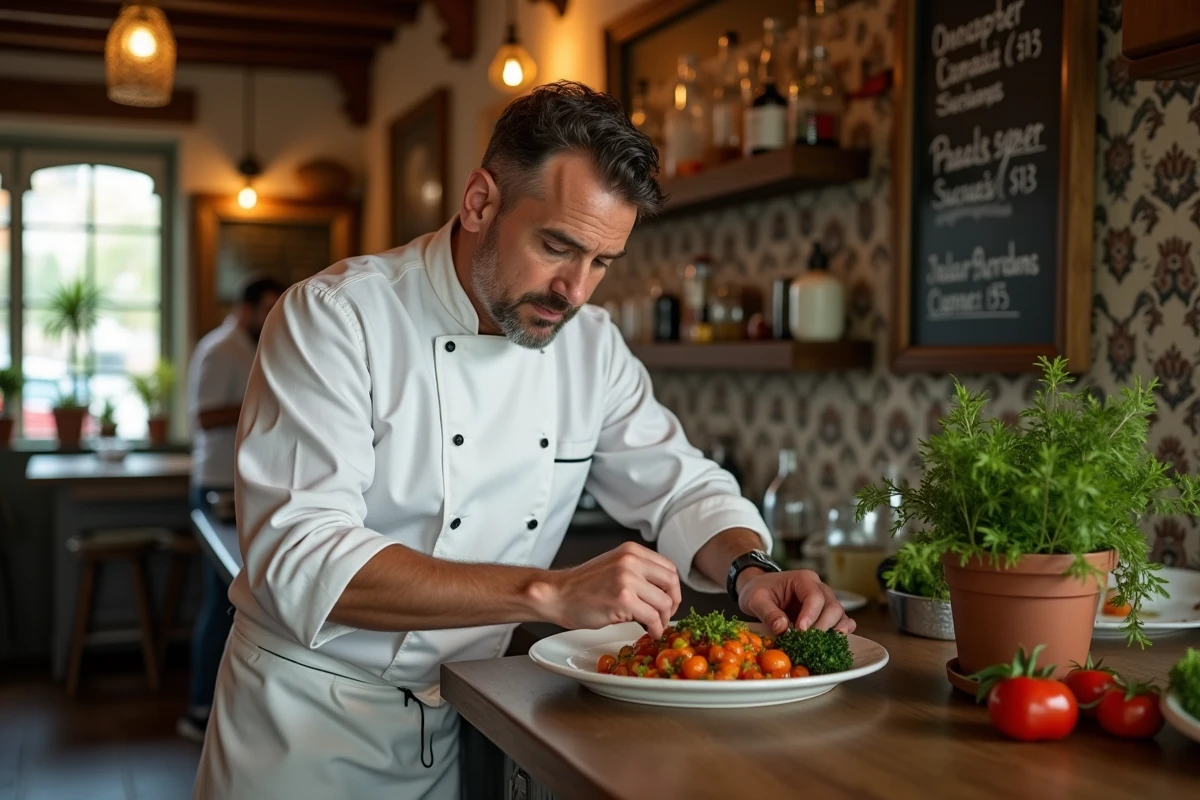
Artisanal French cuisine continues to fascinate all those who do not compromise on quality. Behind every well-executed plate, there is a promise: to cook on-site, respect the seasons, enhance the product, and pass on a technique. Starred chefs like Julien Lemarié at IMA, Virginie Giboire at Racines, or Sylvain Guillemot at the Auberge du Pont d’Acigné exemplify this demanding choice. Each, in their own way, reinvents regional specialties: red meat from the meadows, reinterpreted Breton crêpes, or modernized pommé.
The contribution of local producers changes the game. Take the Champignon des Vallons or the cider makers of Val de la Chèvre: each ingredient becomes the centerpiece of a culinary narrative. The most renowned restaurants, whether starred or bistronomic, forge strong ties with these artisans, ensuring uncompromising freshness and placing their cuisine within a responsible framework.
The Michelin guide’s distinctions highlight this approach. Through establishments like Le Saison or La Table des Pères, the demands and creativity come to life: technique combines with boldness, but never betrays the spirit of the original recipes. In France, everyone finds their camp: between advocates of homemade cuisine rooted in the garden, explorers of botanical or marine cuisine, and those who defend a local grounding at every level.
For those who want to delve deeper into discovery, visiting the Gourmandel website opens the door to curated selections of notable addresses, portraits of inspiring chefs, and reports from producers, all key players in French gastronomy.
Where to savor regional specialties in Paris, Bordeaux, and Marseille?
In Paris, artisanal French cuisine is expressed in all styles and in every neighborhood. From gourmet restaurants to neighborhood bistros, all showcase local products, with a desire to modernize the classics. On the left bank, it’s not uncommon to find a table where the red meat from the meadows is enjoyed in a dimly lit atmosphere, while the Marais offers revisited Breton crêpes or spit-roasted dishes, perfectly reflecting the attachment to the season and proximity to producers.
In Bordeaux, chefs rely on the richness of the local terroir and the proximity of producers. In the heart of the historic center, the menus engage in a dialogue between creativity and respect for the product. Grilled fish, garden vegetables, natural or organic wines—everything is designed to let the flavors speak for themselves, without excess.
In Marseille, the Mediterranean dimension asserts itself strongly. The restaurants of the Old Port, Le Panier, or Vauban revive regional specialties: bouillabaisse, of course, but also other lesser-known recipes, inspired by a marine and plant-based influence. Marseille chefs draw from both tradition and innovation, with a claimed freedom.
Here’s what characterizes each city for those seeking a quick overview of culinary styles:
- Paris: diversity of neighborhoods, refinement, reinterpreted specialties.
- Bordeaux: respect for the terroir, homemade cuisine, local producers.
- Marseille: marine inspiration, botanical cuisine, tradition and modernity.
On Gourmandel, there is a rigorous selection of addresses where one can taste artisanal French cuisine, from warm brasseries to starred tables.
Must-visit addresses for an authentic experience in each city
The French culinary scene is full of tables that shine a light on artisanal cuisine. In Rennes, IMA, under the leadership of Julien Lemarié, earns a Michelin star with a menu interlude where fresh products and an open kitchen tell an unpretentious story. At Racines, Virginie Giboire subtly combines local products with marine inspirations, an alliance praised by the red guide.
Bercail focuses on a natural bistronomic cuisine: the plant decor complements a menu where natural wines and tasting formulas highlight the terroir. At Aux Darons, Vincent Guillemot reinterprets rotisserie and spit-roasted dishes in a bistro spirit, conducive to conviviality.
The Auberge du Pont d’Acigné, led by Sylvain Guillemot, opts for a cuisine of the moment: precision, spontaneity, and respect for the seasonal calendar. In Piré-Chancé, Jérôme Jouadé at La Table des Pères composes his menus from the estate’s garden, a commitment that recently earned him a Michelin star. The Château des Tesnières, on the other hand, offers a botanical interlude orchestrated by Chantel Dartnall in a decor rich in history.
These addresses all share strong values, which can be summarized as follows:
- Authenticity: craftsmanship, homemade cuisine, respect for the product.
- Creativity: innovation, regional inspirations, seasons.
- Terroir: local producers, organic approach, short and committed menu.
Tomorrow, at the counter of a bistro, in the kitchen of a starred restaurant, or on the terrace of a brasserie, new stories are already being written. One just needs to push the door to realize it.